The Problem
A garage door does not go from silent to broken overnight. It complains first. Grinding, popping, a metallic bang when the door starts to lift, a rhythmic thump on the way down - each of these points to a specific part, and most of them get worse for weeks before they fail outright.
The reason this matters more here than it would in a newer subdivision is the age of the stock. Across the service area, houses were built between 1940 and 2015, with the median landing around 1981, and most of the named communities carry heavy 1980s-90s construction. That means a lot of doors are running on openers, springs, and track hardware that were installed alongside the house or replaced once in the decades since - original-era parts that were never designed for the loads or the winters this region actually delivers.
A door that's 20 to 40 years old doesn't fail the same way a five-year-old door does. Lubricant has dried out of the rollers, the spring has lost tension slowly rather than snapping, and the track has racked slightly out of true from years of temperature cycling. The noise is the early warning. Ignoring it just moves the repair from a $200 job to a full spring or opener replacement.
How Local Conditions Play In
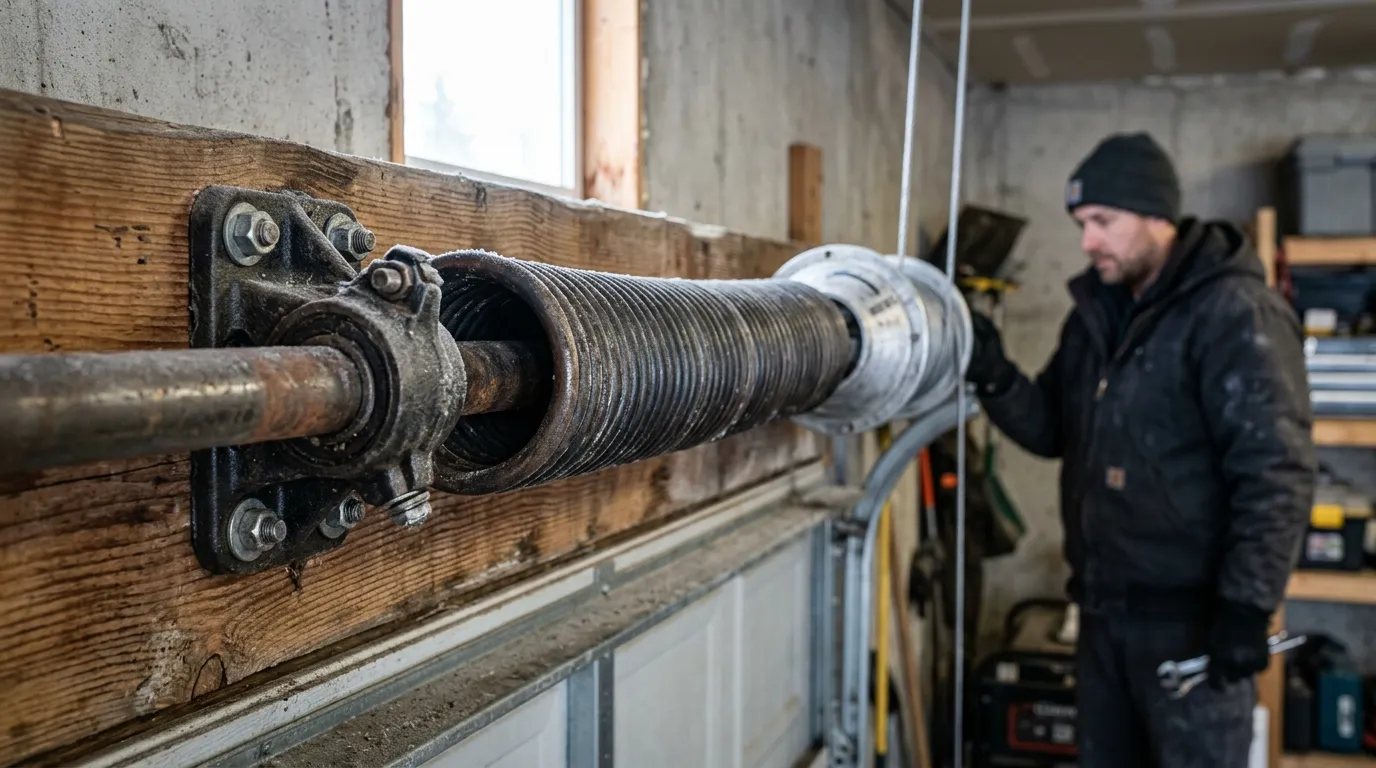
This area sits in a cold-severe climate band, and that shows up in the metal before it shows up in the motor. Steel torsion springs lose tension as temperatures drop - a door that was quiet in September can start groaning by January because the spring is now working harder to lift the same weight of panel. That's a seasonal noise, not a random one.
Cold also stiffens grease and thickens old lubricant on rollers and hinges, which turns a smooth roll into a squeal or a chatter. On the 1980s-90s stock that makes up most of this housing, factory lubrication is long gone and whatever was applied since may not be rated for the swings this climate produces.
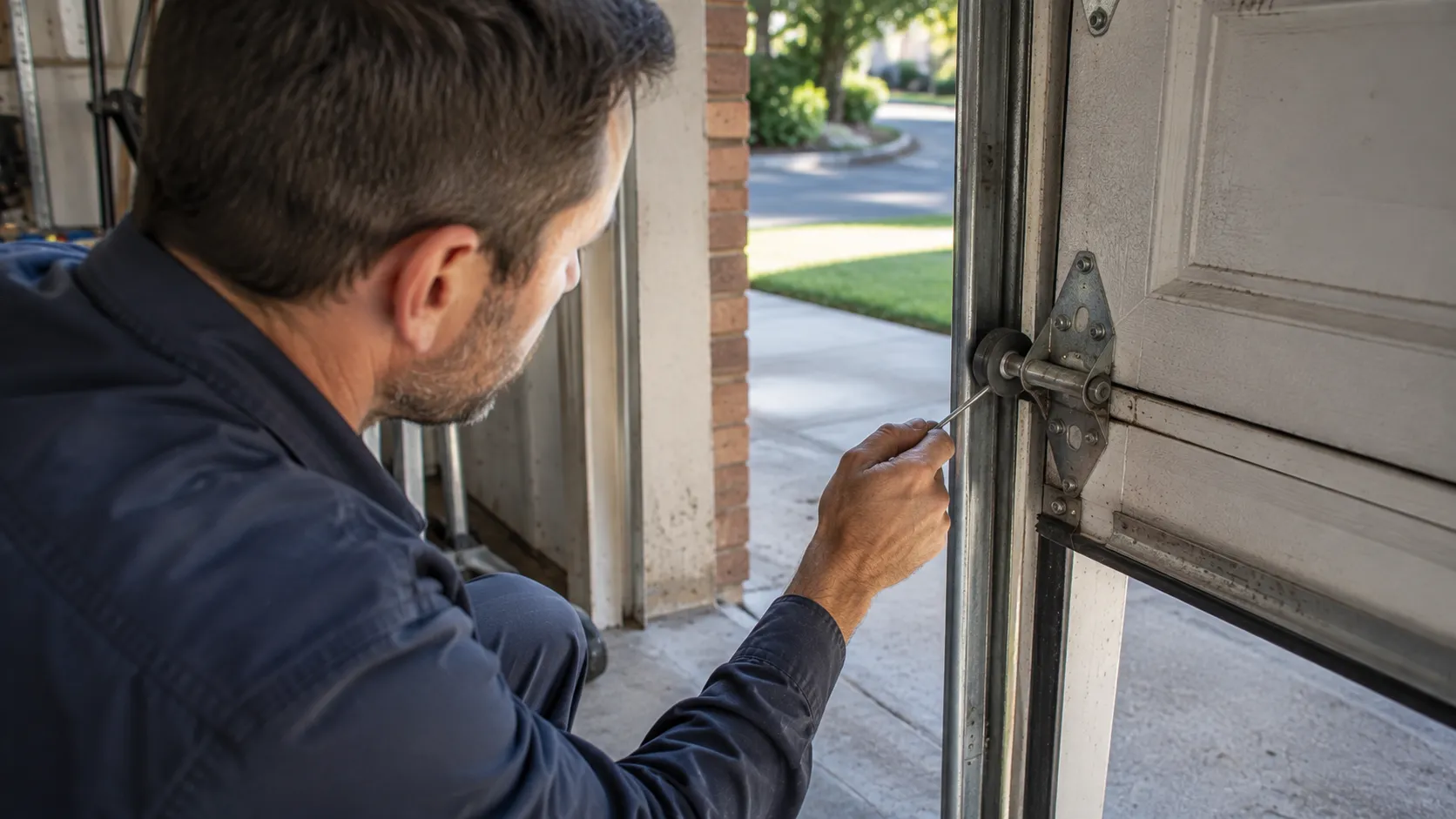
The other local factor is age-matched hardware. Doors from the 1981 median era commonly run galvanized rollers on steel track, a combination that's fine when new but gets noisy as the rollers wear oval instead of round. You hear that as a rumble that rises and falls with the door's speed, distinct from the sharp pop of a spring or the bang of a broken cable.
Checking It Yourself
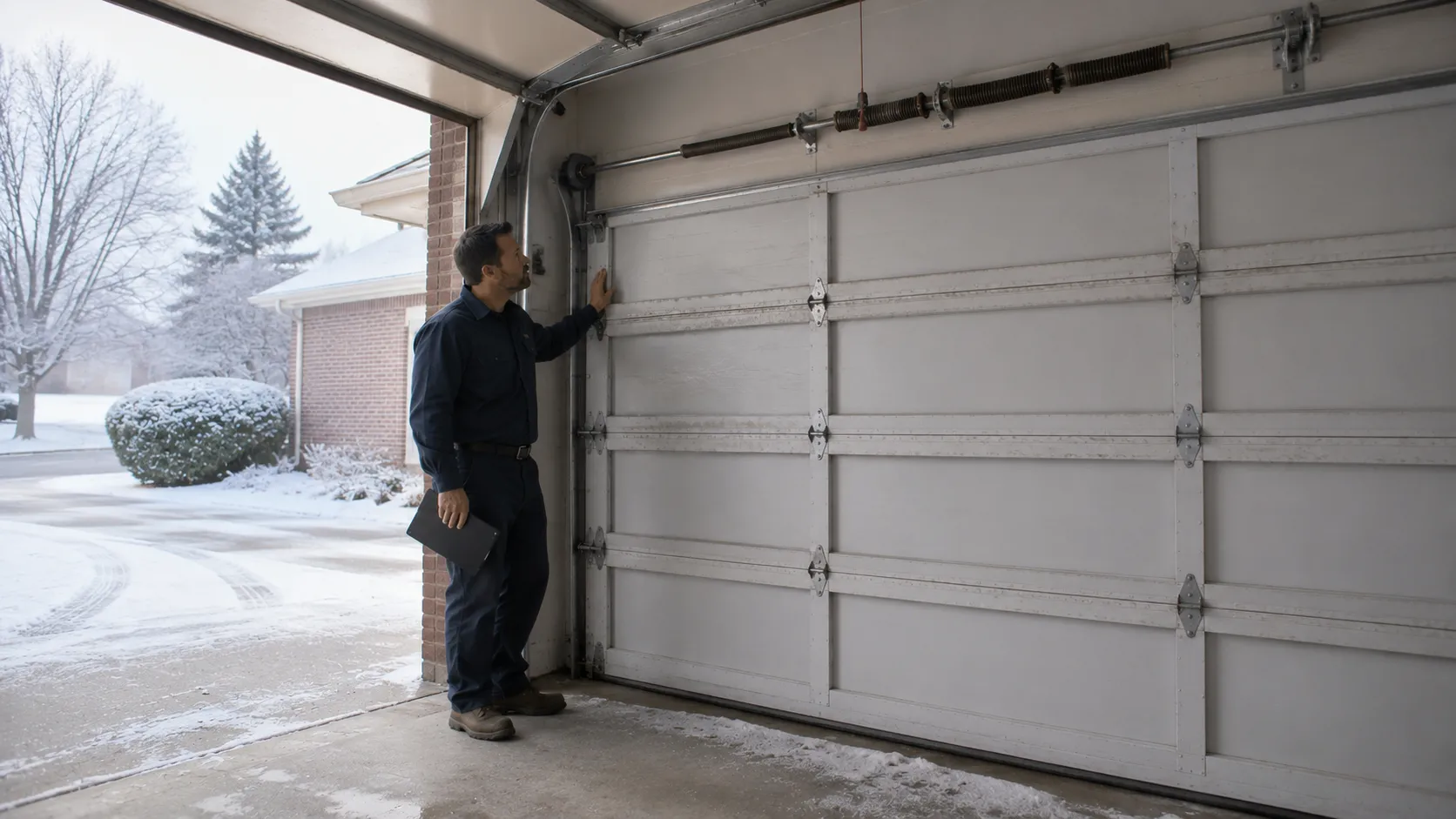
Stand next to the door, not in front of it, and run it through a full cycle listening for where the sound starts and stops. A noise that happens only in the first foot of travel is usually the spring or the bottom bracket. A noise through the whole run points to track or rollers.
Grinding that stays steady the whole cycle is usually a roller that needs replacing, not lubricating - lubricant on a worn roller just delays the noise, it doesn't fix it. A sharp bang followed by the door refusing to move is very likely a broken spring; do not put your hands near it or try to lift the door manually.
A rattling that's louder near the top is often a loose hinge or track bracket, which on houses from the 1980s-90s wave is common simply from decades of thermal expansion and contraction loosening the lag screws. Check that the brackets are still tight against the jamb.
What you can't reliably diagnose from the ground: torsion spring tension, cable fraying inside the drum, or whether the opener's force settings have drifted. Those need hands-on inspection, and a spring under tension is not a DIY repair regardless of how simple it looks.
What Changes With the Season
In this climate band, the same door can sound different in July and January without anything being newly broken - the spring's effective tension shifts with temperature, and that shift is bigger on older, harder-working springs. A door that's a little noisy in summer often gets noticeably louder once cold settles in, because the spring is now compensating for both age and temperature.
Cold snaps are also when weak openers get exposed. Older opener motors on 1980s-90s installs draw more startup current when grease has stiffened, and that shows up as a hum or hesitation before the door moves. If that hesitation turns into the opener straining and reversing, the door is telling you the spring balance is off, not that the opener is failing on its own.
One honest limitation: we can tell you what a noise usually means over the phone, but we can't tell you exactly which part on your specific door until someone's looked at the spring wire size, the track alignment, and the roller wear in person. Sound diagnosis gets you close. It doesn't replace an inspection.
Talk to a local pro
Garage door trouble in Chantilly?
Same-day service with honest, upfront quotes.