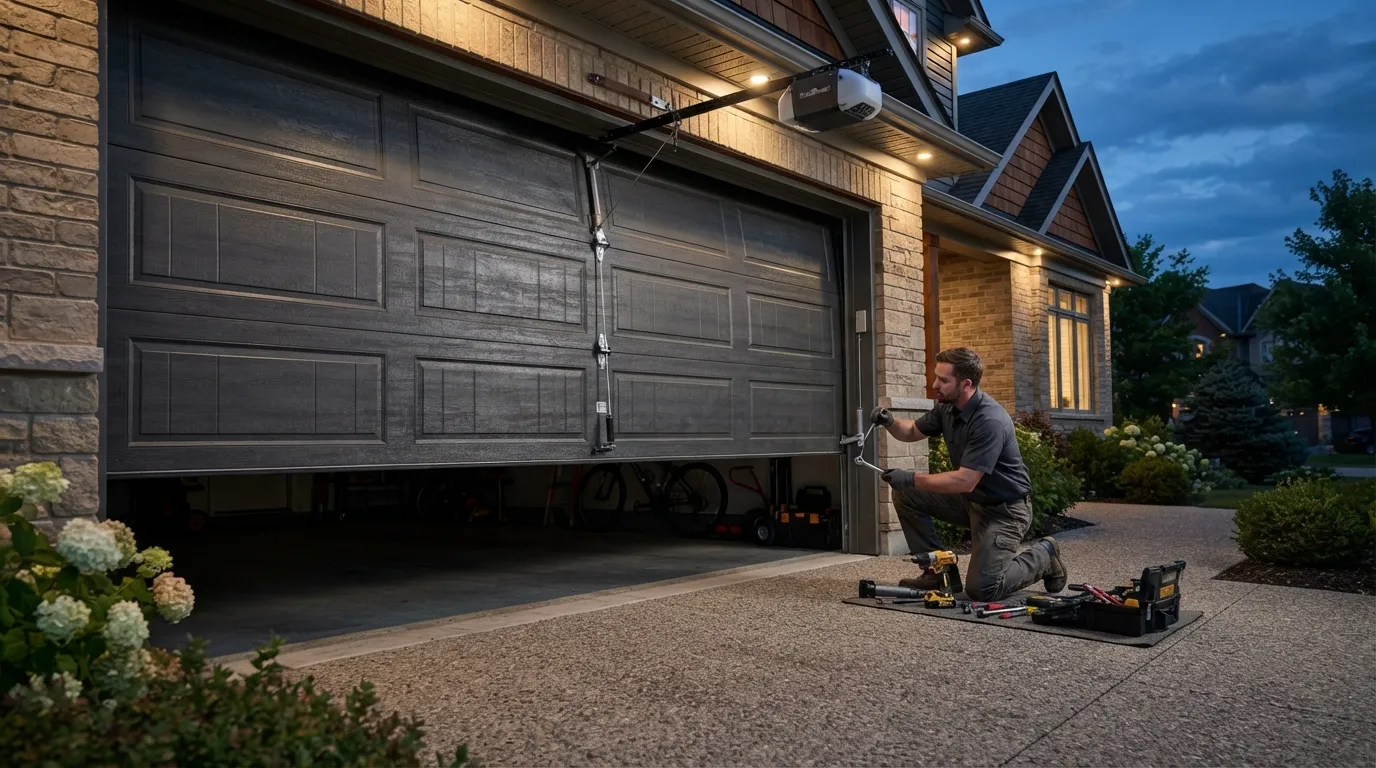
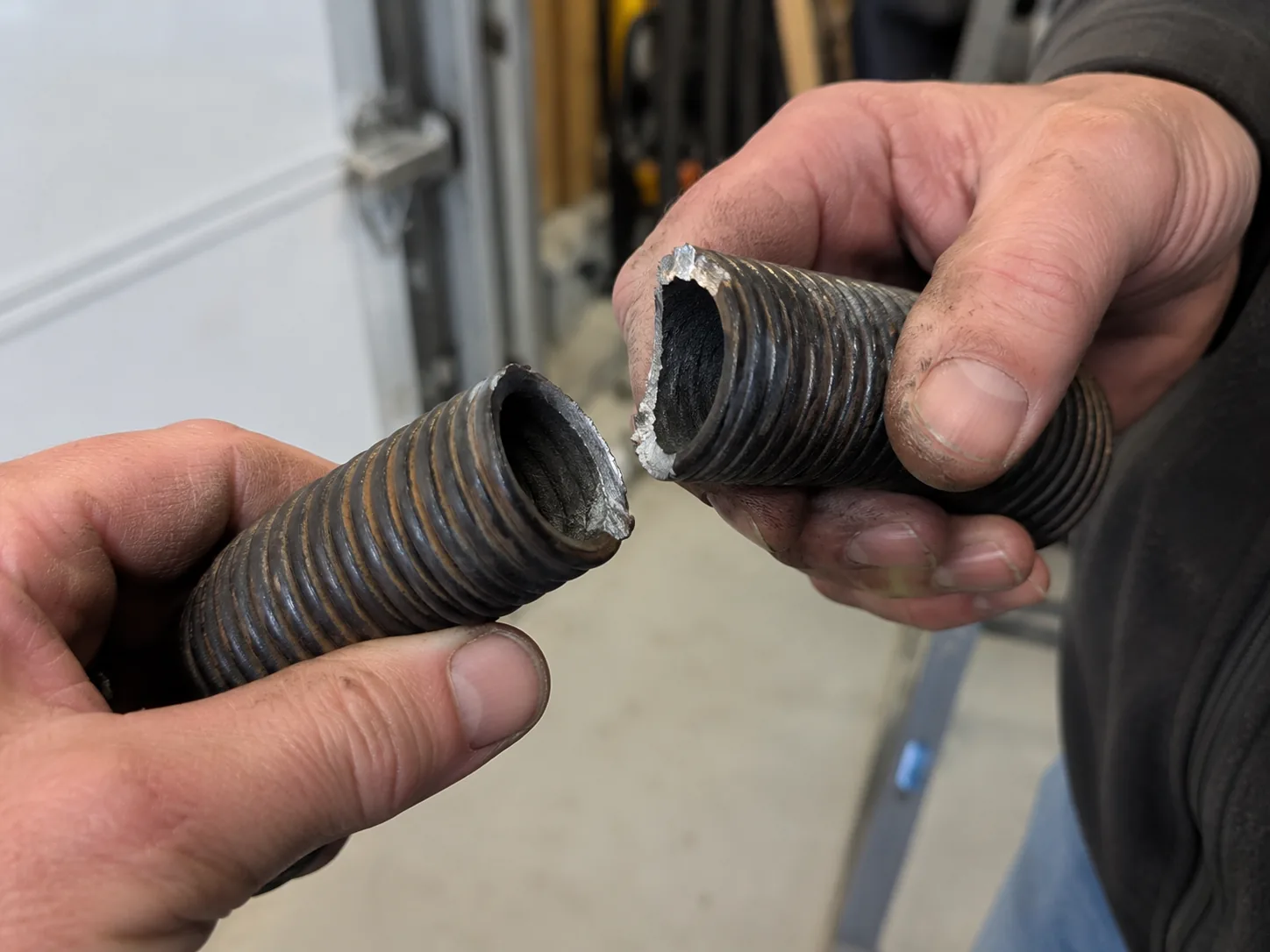
The service area sits in a climate band rated cold and severe, and that's the biggest single driver of commercial door failure here. A steel roll-up door left outside all winter goes through repeated freeze and thaw - the panel seams tighten, the weatherstrip stiffens, and the grease in the torsion spring and the bearing plates thickens up right when the door is being cycled the most, at the start and end of the business day. A spring that's already fatigued from years of cycling snaps under that extra drag instead of just slowing down.
A lot of the light-commercial and small industrial buildings clustered near the housing here went up in the same building wave as the neighborhoods around them - most of the area's housing stock dates to between 1940 and 2015, with the bulk of it built in the 1980s and 90s. Buildings from that era were fitted with the standard steel-panel roll-up doors and chain-drive or early screw-drive openers of the time, and thirty-plus years of daily cycling on that original hardware is exactly the kind of wear that shows up as a broken spring or a stripped opener gear today.
With a median household income of $149,344 across the service area, we see plenty of owners who'd rather keep a working door running properly than replace it outright - which is part of why we stock repair parts as heavily as we do.