
Door tracking true requirement
That last part matters more than people expect, because an opener installed on a door that isn't tracking true will fail again inside a year regardless of brand.
Chantilly, VA
Opener installation for Chantilly homes built mostly in the 1980s and 90s, matched to older track and cold-climate load. Straight talk on what the job takes and costs.
The repair
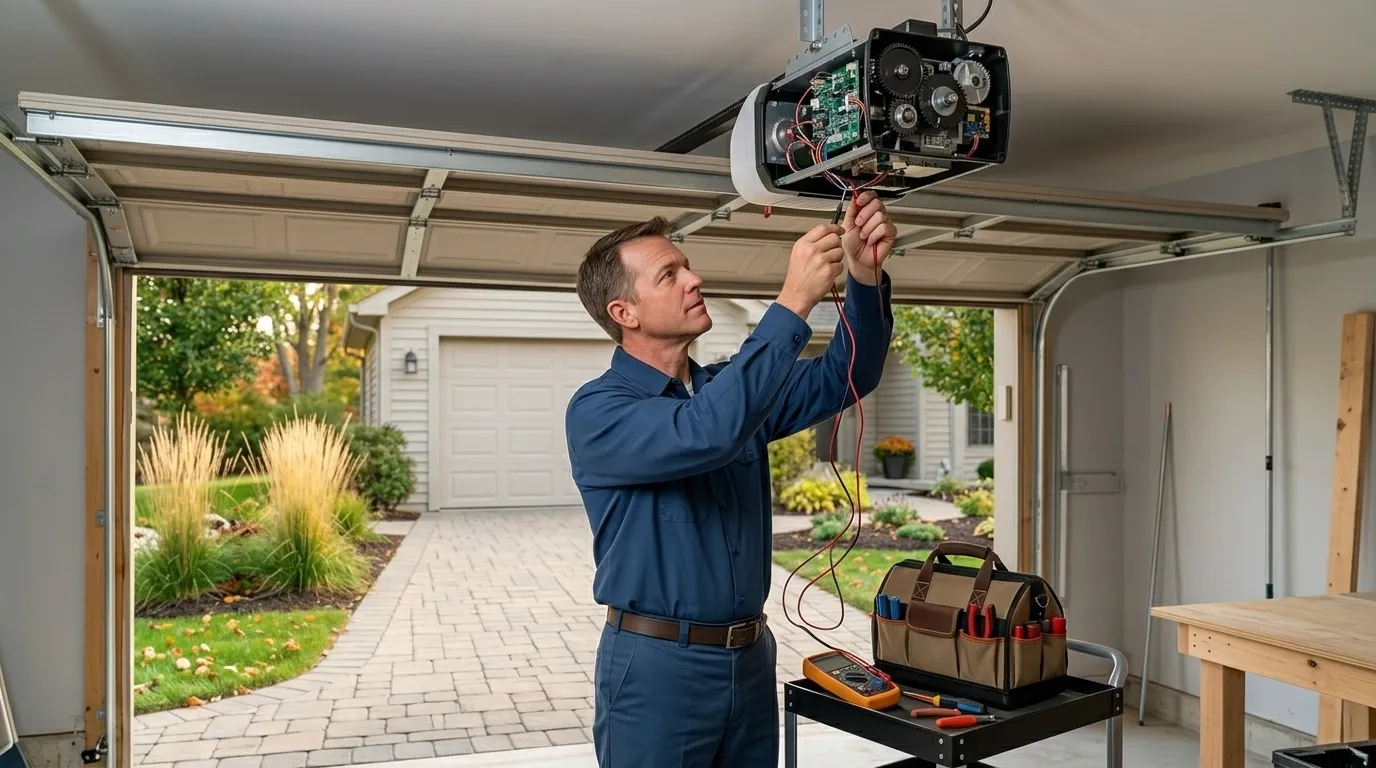
A proper opener install is not just bolting a new motor head where the old one hung. Most houses in this service area went up between 1980 and 1999, and a lot of them still have the original track, header bracket, and door weight the builder spec'd decades ago.
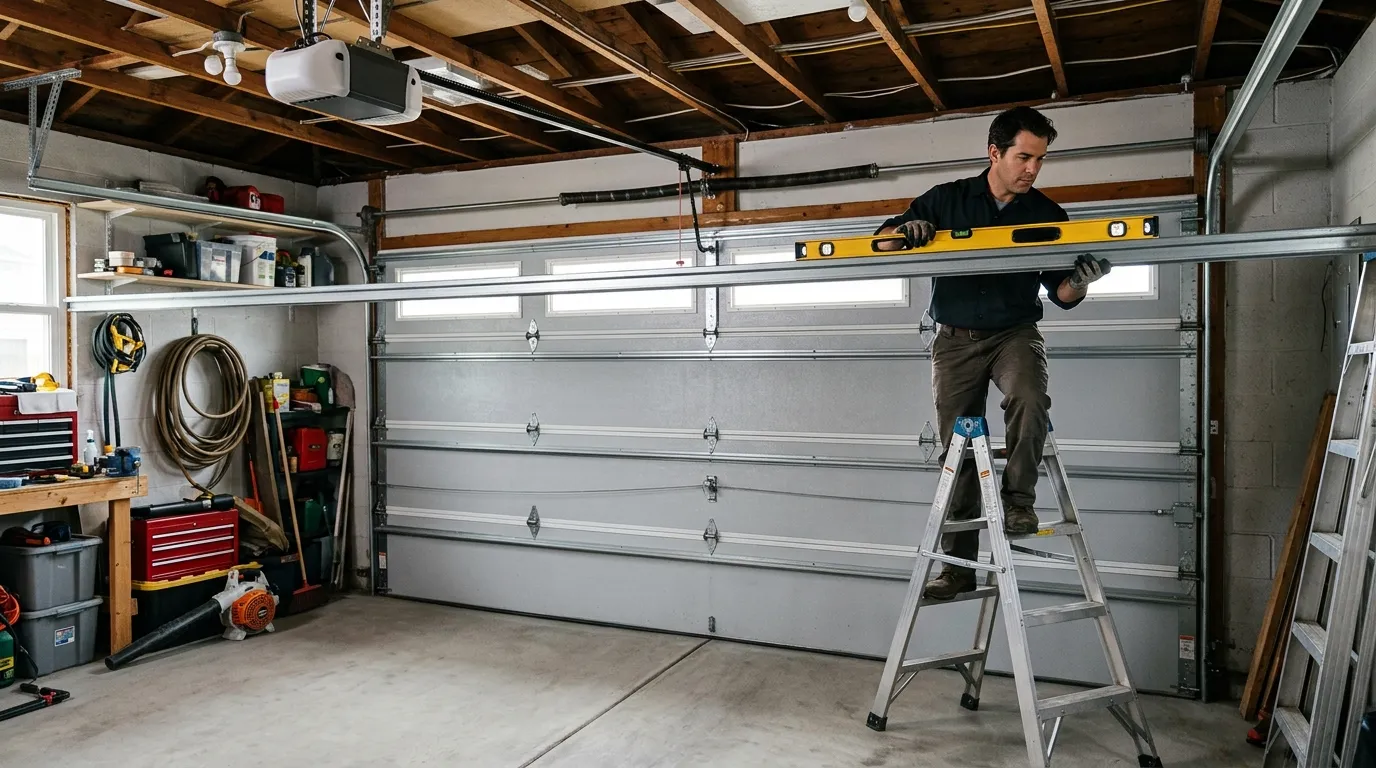
Before we hang a new unit we check that the track is straight, the header bracket is still lag-bolted into solid framing (not just drywall and hope), and that the door itself is light enough for the opener's rated horsepower. Heavier insulated doors, common in retrofits done for the cold winters here, need a stronger drive and sometimes a reinforced top panel bracket.
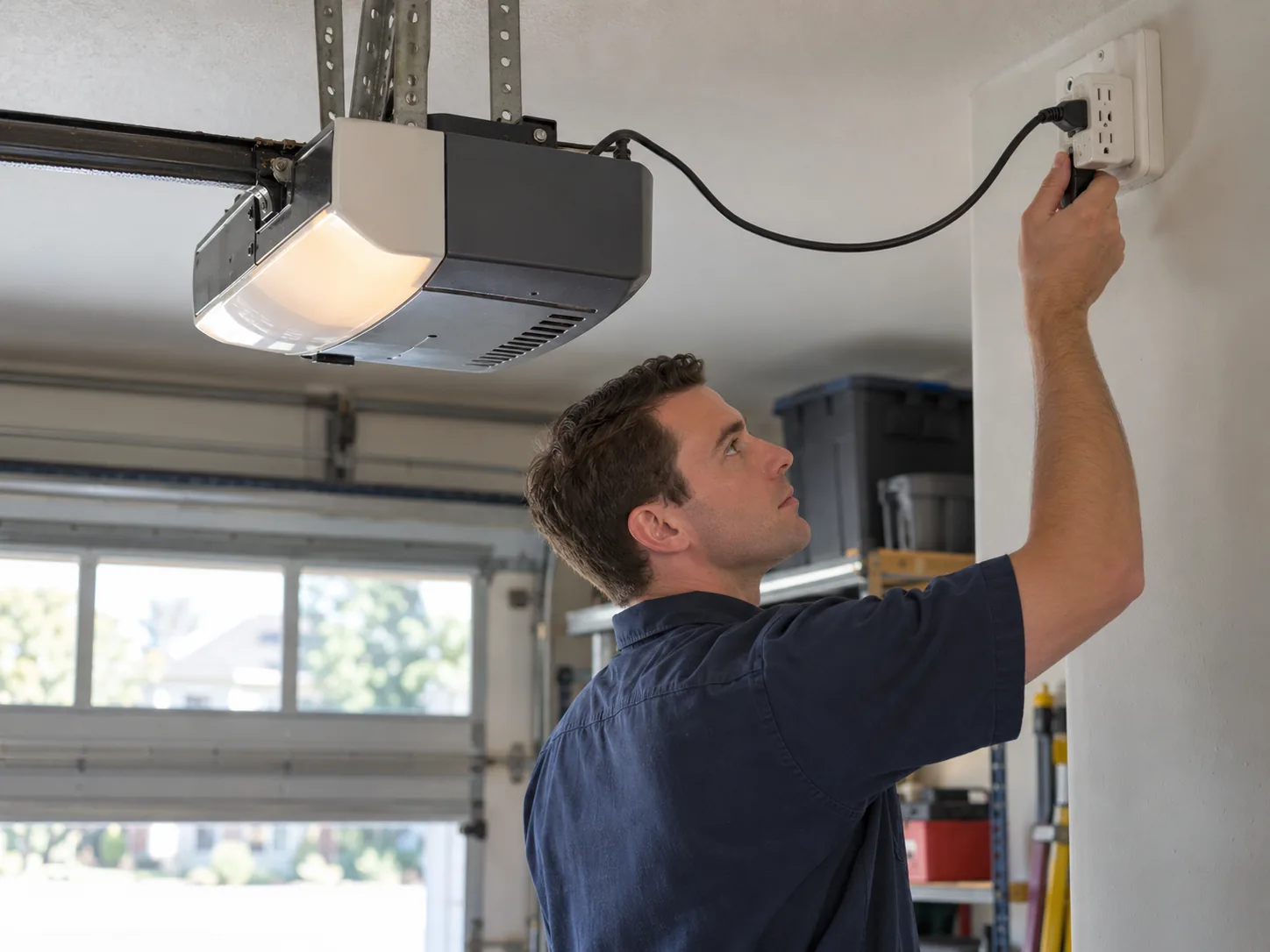
Wiring is the other piece nobody thinks about until it's a problem. Older homes built before the mid-1990s often have no dedicated outlet near the header, which means either running a new circuit or accepting an extension cord setup we won't sign off on.
We also set the travel limits and force settings by hand, not just by the auto-set wizard, because a door that's slightly out of balance from age will fight a stock setting and burn out the drive gear early. Expect the job itself, once the door and track are confirmed sound, to run the bulk of a service visit. If the track or panel needs work first, that's a separate line item, not a surprise fee.
Booking
Booking starts with a straight answer about what you have now: belt, chain, or screw drive, how old the door itself is, and whether you've had trouble with the door lately (sticking, dropping, running loud).
That last part matters more than people expect, because an opener installed on a door that isn't tracking true will fail again inside a year regardless of brand.
We schedule around the two things that actually change the job: whether a dedicated outlet exists near the header, and whether the existing track and springs are rated for the new opener's pull. If either needs correcting, we say so before the truck rolls, not after.
For households in this income bracket buying into higher-end insulated doors, we also confirm the opener's horsepower against the door weight rather than defaulting to whatever's in stock, since an undersized unit on a heavy door is the single most common warranty comeback we see.
Local causes
The housing stock across this service area runs mostly 1940 through 2015, with the bulk built in the 1980s and 90s. That matters for openers specifically because chain and belt drives from that era were sized for the lighter, single-layer steel doors builders used at the time. Homeowners who've since upgraded to a heavier insulated door - a common move given the cold winters here - are often running an opener that's undersized for the door it's lifting. The motor works harder every cycle, the gear wears faster, and eventually it strips or the door starts reversing on its own partway up.
The cold is the other half of it. In a severe cold climate band, grease inside an old gearbox thickens in January, and a motor that's already borderline on horsepower stalls instead of just slowing down. That's the pattern we see most in this area: an opener that ran fine for fifteen years suddenly struggling every cold morning, not because it broke overnight but because the door it's lifting got heavier over time while the drive stayed the same.
Warning signs
If the opener hums but the door doesn't move, or moves an inch and stops, that's usually a drive gear that's stripped from years of working past its rated load - not a dead motor.
If the door reverses halfway up on cold mornings and runs fine by afternoon, that's the force setting fighting stiff, cold-thickened grease in an older gearbox, a pattern we see a lot given the climate here. A remote that works inconsistently is almost never the opener itself; check the antenna and battery before assuming the whole unit needs replacing - that's the one we tell people not to pay for a truck roll over if they can check it themselves.
A door that opens fine but closes only partway, then reverses, points to the safety sensors near the floor, not the motor - common after they get knocked out of alignment by a bike, a trash can, or a plow blade in winter.
None of these symptoms alone tell you it's time to replace versus repair the opener; that call depends on the age of the unit and whether the drive gear is a sealed assembly or a serviceable one, which we check on site before quoting either way.
Questions
If the motor runs but the door barely moves, that's often a stripped drive gear, which can sometimes be replaced instead of the whole unit. But on units over a certain age, the gear housing is sealed and not serviceable, so replacement ends up cheaper than a repair that won't hold. We check the housing type on site before quoting either way.
Sometimes. If the old opener is undersized for a heavier insulated door, cold-thickened gearbox grease makes an already-borderline motor stall on winter mornings. A correctly sized new opener usually clears that up. If the real issue is a door out of balance or a weak spring, though, a new opener alone won't fix it - we check both before recommending one.
Many homes in this area, especially those built before the mid-1990s, don't have a dedicated outlet near the garage header. If yours doesn't, we'll say so before the job starts, since running new wiring is a separate cost from the opener install itself and changes the timeline.
Explore more
Ready when you are
Chantilly Garage Door Pros repairs and installs garage doors, springs and openers in Chantilly, VA and the surrounding area.