
Guide
Picking a Replacement Door That Fits This Housing Stock
Housing here runs from 1940s builds to homes finished in 2015, with most stock dating to the 1980s and 90s. That mix changes what door size and insulation actually fit.
Local detail
The Problem
Most homeowners shopping for a replacement door start with the display models at a big box store and work backward, and that's where the trouble starts. Housing in this service area was built across a long stretch, from 1940 through 2015, with the median build landing around 1981. That's not a small range.
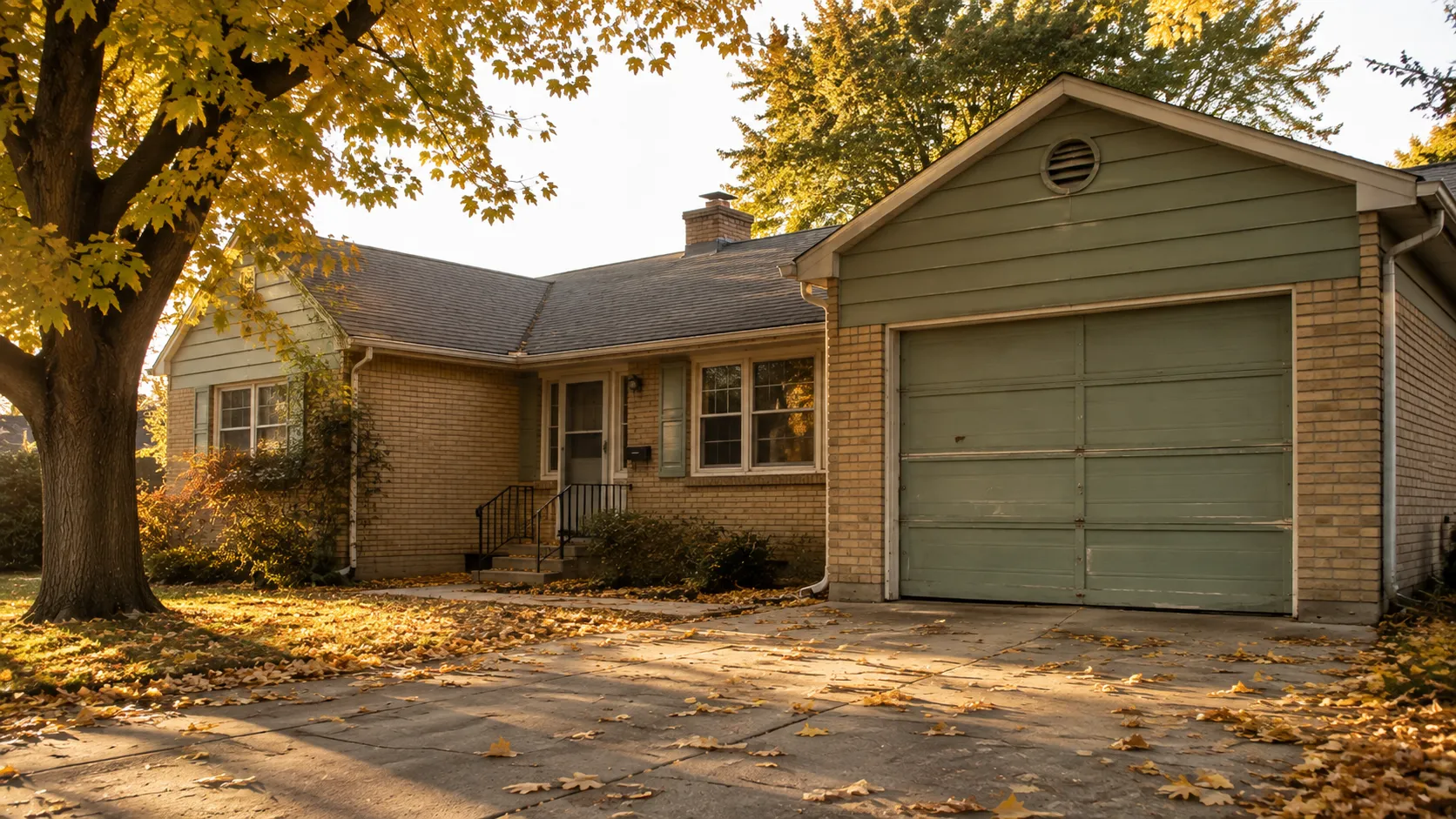
A door sized and insulated for a house framed in the 2000s can be flat wrong for an opening cut in the early 1980s, and vice versa. Across the 32 named communities the service area covers, most of that stock clusters in the 1980s and 90s build years, which means openings, header clearance, and track configurations follow patterns from that era more than anything newer. Buy off a showroom floor without checking your actual opening against your house's build era and you end up either paying for a custom order later or living with a door that never quite seals right.
With a median household income of $149,344 across the area, most owners here aren't buying on the cheapest end of the rack, but that doesn't help if the size or hardware assumption is wrong from the start. Measure before you shop, not after.
The area
How Local Conditions Play In
This area sits in a cold climate band with severe winter conditions, and that has a direct effect on what door actually earns its price. An uninsulated or lightly insulated panel that's fine in a mild climate becomes a cold wall in your garage here, and if that garage shares a wall with living space, you'll feel it. Doors rated for a higher R-value cost more upfront but they're doing real work in a winter like the ones this area gets.
The service area runs from communities as close as Bull Run, four miles out, to ones as far as Catlett, nineteen miles away, and the housing in nearly all of those places falls into the same 1980s-90s construction window as F2 describes. That matters because openings and framing built in that period tend to share the same rough dimensions and hardware assumptions, so a door sized right for a house in Sudley or Yorkshire is a reasonable starting point for a house of the same era near Chantilly. It's not a substitute for measuring your own opening, but it tells you what range to expect before a salesperson quotes you something built for a different climate entirely.

What we find
Checking It Yourself
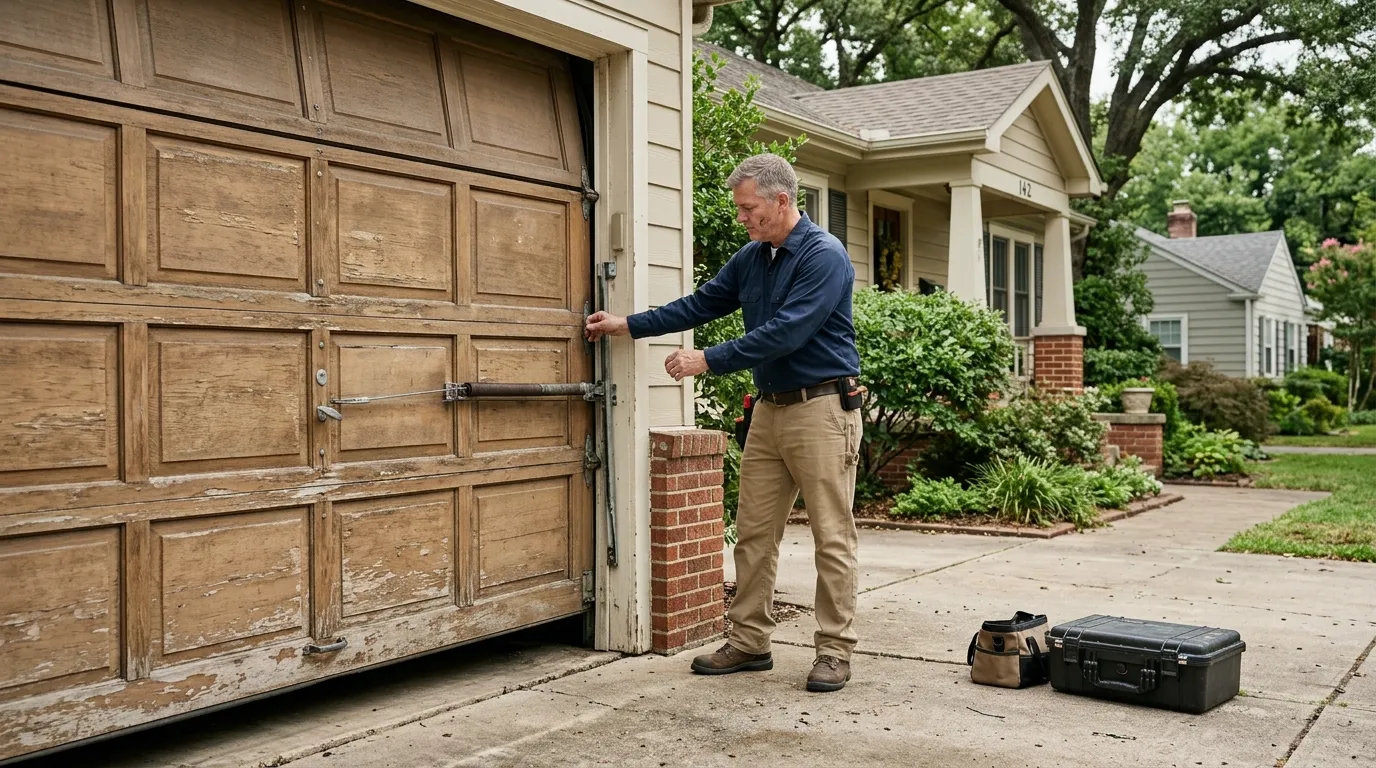
Before you call anyone, walk out to the garage with a tape measure. Get the width and height of the opening itself, not the door currently hanging in it, since a sagging or misaligned door can throw off the number by an inch or more. Check the headroom above the opening and the sideroom on both jambs; older openings from the 1980s-90s window common in this area sometimes run tighter on both than what current door hardware expects, and that changes which track system will actually fit.
Look at your current door's core, if you can see it at a cut edge or a damaged panel: a thin steel skin with no visible insulation tells you it's likely original to a house built before double-layer construction became standard practice. Note whether your garage shares a wall with a bedroom or living room above it. That single detail should drive your insulation decision more than anything a salesperson tells you.
Write all of this down before you get a quote. A shop that measures for you on-site will catch what a tape measure misses, but showing up with your own numbers means you can tell right away if a quote is sized for your actual house or for a generic average.
How we work
What Changes With the Season
Winter here is the season that actually tests a new door, not the day it goes in. Cold metal contracts, and a door with worn weatherstripping or a marginal insulation rating will show a visible gap at the bottom corners in January that you'd never notice in July. If you're buying now with winter coming, don't skip the bottom seal and the insulation rating to save money on the sticker price; that's the part doing the work when the temperature actually drops in a severe-winter climate like this one.
Spring and fall are the easier install windows, weather-wise, and lead times can stretch longer in the run-up to winter simply because more owners are thinking about it at the same time you are. One honest limitation: if your opening is a nonstandard size, which turns up more often in the older end of this area's 1940s-1970s stock, expect to wait longer for that door to arrive than for a standard size off a regular order. That's a manufacturer lead-time issue, not something a rush fee fixes, so budget the extra week or two into your plan rather than finding out the week you need the door installed.
Questions
Common questions
How do I know what door size fits my garage?
Measure the actual opening - width and height - not the door hanging in it now. Also check headroom above the opening and sideroom on both sides, since older openings common in this area's 1980s-90s stock sometimes run tighter than current hardware assumes. Bring those four numbers to any quote.
Do I need an insulated door here?
Given the cold, severe winter conditions in this area, yes - especially if your garage shares a wall with living space. An insulated panel with a decent R-value keeps that shared wall warmer and cuts down on the cold-air pocket a bare steel door creates in January.
Why is my quote taking longer than expected to fill?
Nonstandard openings, which show up more in the area's older 1940s-1970s builds, often mean a longer manufacturer lead time than a standard-size order. It's not padding on the quote - it's a real wait on the door itself, so plan for it if your house falls in that older range.
Ready when you are
Need a garage door sorted in Chantilly?
Chantilly Garage Door Pros repairs and installs garage doors, springs and openers in Chantilly, VA and the surrounding area.