
Guide
Why Older Chantilly Garages Feel the Cold So Fast
In Chantilly, VA, homes built between 1940 and 2015 often carry garage doors with little to no insulation, a real problem once cold winter nights set in.
Local detail
The Problem
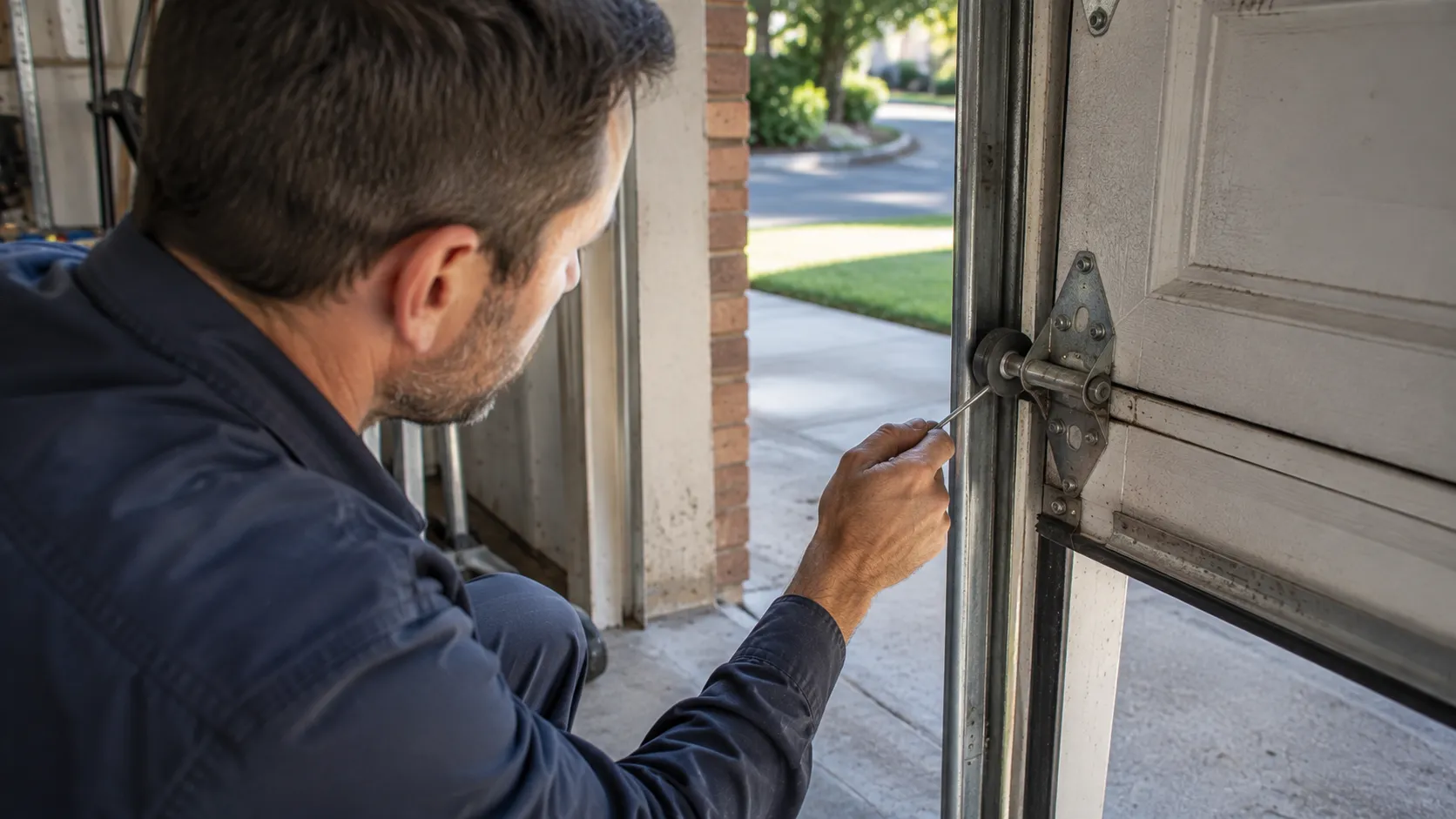
Most of the housing stock around Chantilly went up between 1940 and 2015, with the median build year landing at 1981. That matters more than it sounds. Garage door insulation standards didn't become a routine builder spec until well after that median date, so a large share of the doors still on these houses are original or close to it: single layer steel, sometimes wood, with no foam core and no thermal break at the seams. You feel it as a cold garage in January and a hot one in July, but the real cost shows up on the wall it shares with the house - a bedroom or laundry room that never quite matches the thermostat setting. A door built to 1980s-era standards was engineered to keep rain and wind out, not to hold heat in. That's not a defect. It's just what the code asked for at the time, and nobody has gone back and upgraded most of these doors since.
The give-away is usually the panel itself. Tap it. If it sounds hollow and thin, with visible ribbing on the inside but no white or silver foam backing, you're looking at one of these pre-insulation doors. It still opens and closes fine for years - that's the trap. Nothing about it fails obviously, so nobody replaces it until something else forces the issue.

The area
How Local Conditions Play In
This area sits in a climate band the federal data marks as cold with severe winter conditions, which changes what an uninsulated door actually costs you versus a milder region. In a place with mild winters, a thin steel door is mostly a comfort question. Here, it's a load question. Cold air pooling against an uninsulated panel drops the surface temperature of that whole wall, and moisture in the garage air condenses on the inside of the door - you'll see it as beading or a rust line along the bottom panel edge over a few winters. That condensation is what actually kills these older doors, not the cold itself. Steel doesn't mind cold. Steel minds trapped moisture running down the same six inches of panel every night for thirty years.
Severe cold also stiffens the door's own weatherstripping and any foam that was added later as a retrofit rather than a manufactured insulated panel. Retrofit foam boards glued to the inside of an old panel don't flex the way a manufactured sandwich-core door does, and in hard cold they can separate from the steel, which is a common reason a door that used to close quietly starts thumping on the last foot of travel.
What we find
Checking It Yourself
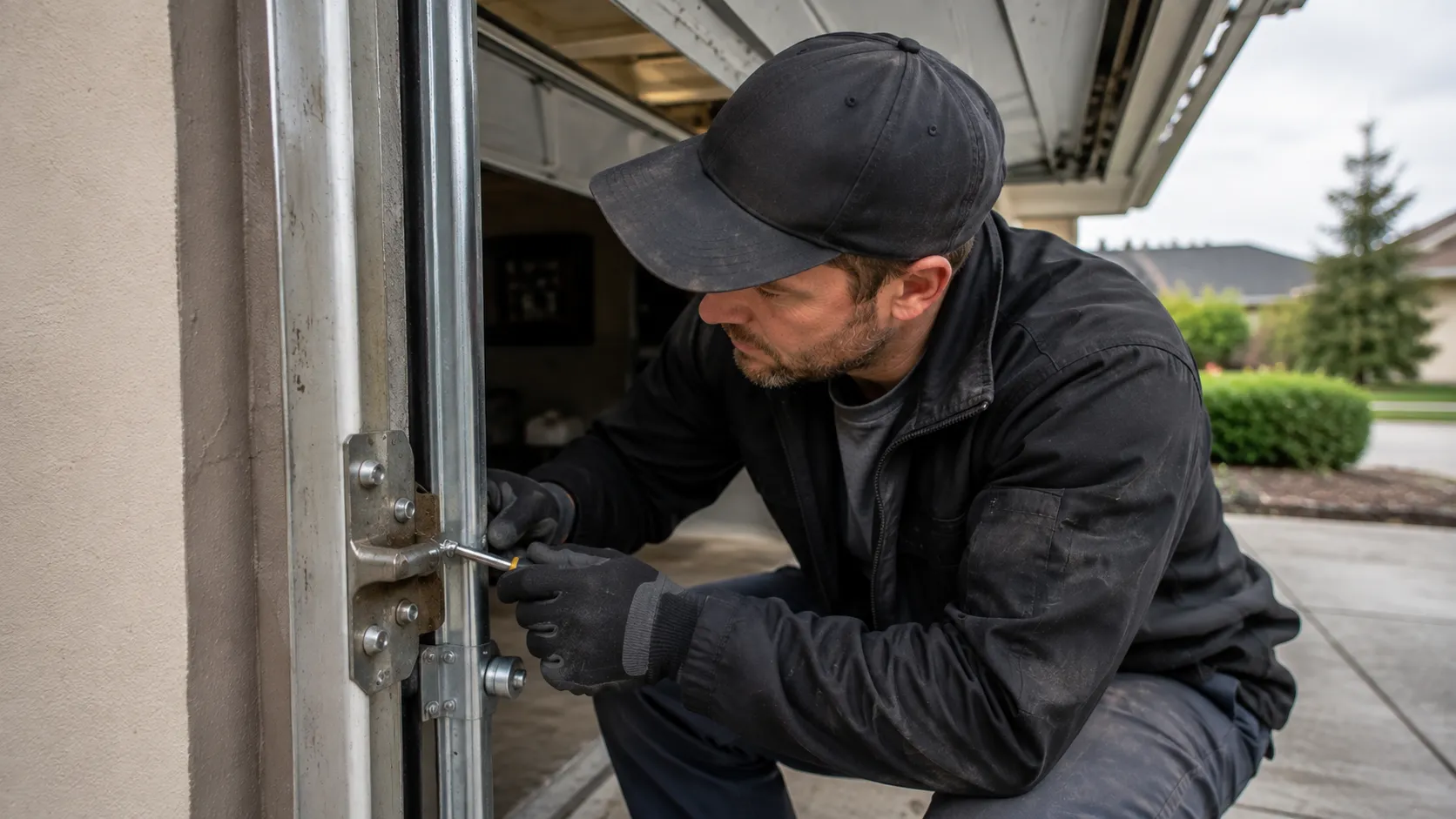
Open the door and look at the inside face of the top panel. A true insulated door has a continuous foam or fiberglass batt bonded between two steel skins, usually finished with a white vinyl backer - it looks manufactured, flat, and even. An uninsulated original has bare steel ribs and daylight-colored horizontal bracing with nothing filling the gaps. If you see foam board cut and glued in afterward, uneven at the edges, that's a retrofit, not a factory insulated door, and it will perform differently in the cold than the boxes claim.
Next, check the bottom weatherstrip and the seal where the panels meet. On a door this old, the astragal at the floor is often original rubber, cracked and flattened rather than round, which lets a visible gap of daylight show under the door even when it's fully closed. Run a hand along both jambs on a cold morning - if you feel moving air rather than just cold surface, air is passing through the frame, not just the panel.
One honest limitation here: if the panel steel itself is rusted through or the door is warped from decades of that condensation cycle, insulating it isn't worth the labor. At that point you're paying to foam a door that needs replacing anyway, and a new insulated door does the job the old one never could.
How we work
What Changes With the Season
As the cold sets in, an uninsulated door on a house from this era starts doing double duty as a weather barrier it was never built to be. Torsion springs sized for the door's original weight can feel tighter in deep cold because the metal itself contracts slightly, and if moisture has been getting into the bottom panel for years, that panel is now heavier than the springs were set for - you'll notice it as an opener that strains or a door that doesn't sit level when it's down.
Lubricant matters more here too. Old hinges and rollers that were fine in mild months can bind up once temperatures drop hard, especially if the grease has never been replaced since the door went in decades ago. It's a five-minute check that a lot of these older setups have simply never gotten.
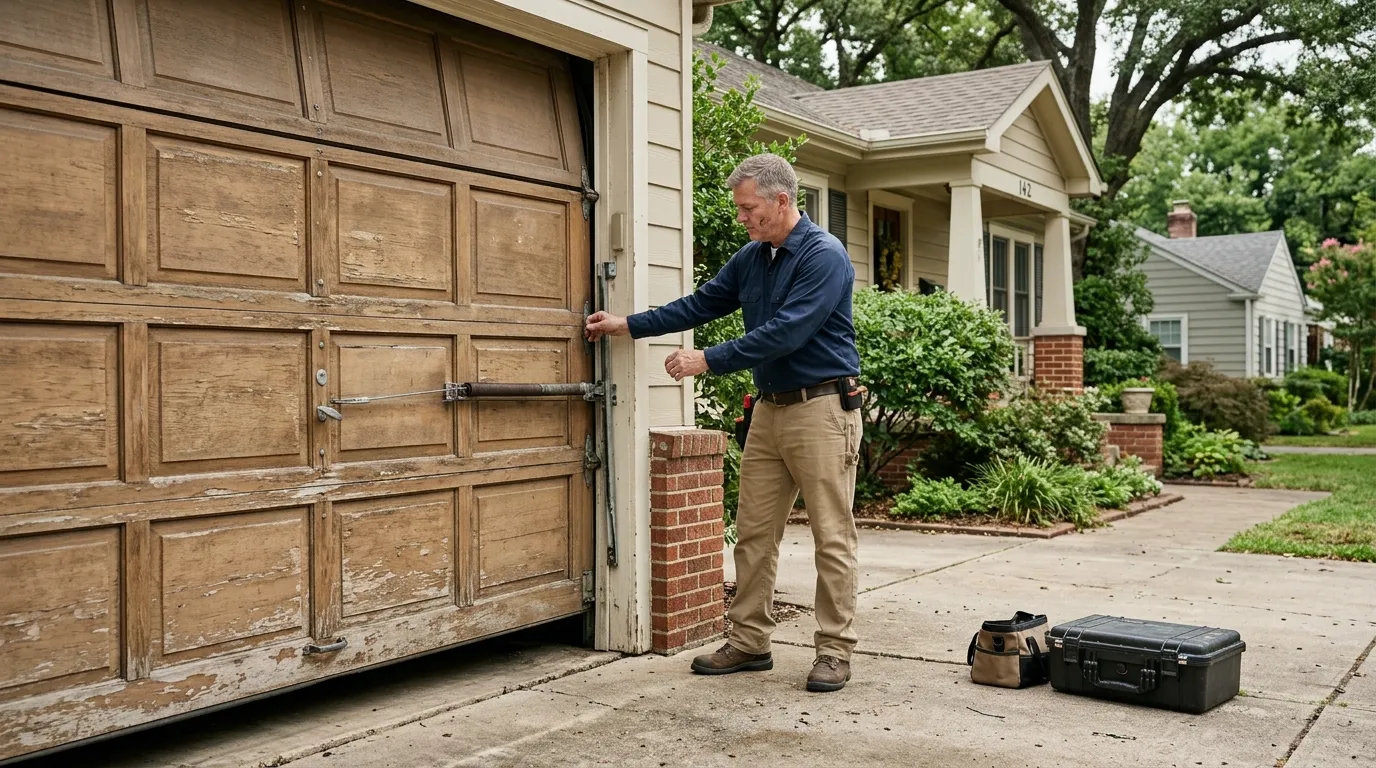
Come spring, watch for the reverse problem: condensation that built up all winter drying out and leaving a visible rust bloom along the bottom two panels. That's the clearest sign the door has been running uninsulated and unsealed through another cold season, and it's usually the point where a homeowner decides whether to patch it again or finally swap in a door built to hold heat the way the original never did.
Questions
Common questions
How do I know if my garage door in Chantilly has any insulation at all
Open the door and look at the inside of a panel. A true insulated door shows a smooth, even foam or fiberglass core between two steel skins, usually with a white vinyl liner. If you see bare ribbed steel with nothing filling the gaps, or unevenly glued foam board added later, the door has no factory insulation and is losing heat straight through the panel.
Is it worth insulating an old uninsulated door instead of replacing it
It depends on the steel. If the panels are solid and just bare, a retrofit kit can help, though it won't perform like a factory sandwich-core door. If you're already seeing rust blooms or warping from years of condensation, which is common on doors from the 1980s and 90s stock in this area, insulating a failing panel is money spent on a door that needs replacing anyway.
Why does my old door thump or bind once winter hits
Severe cold stiffens weatherstripping and any glued-on foam retrofit, and a bottom panel that's absorbed moisture over the years gets heavier than the springs were originally set for. That combination shows up as a door that thumps on the last foot of travel or an opener that strains to lift it on cold mornings.
Ready when you are
Need a garage door sorted in Chantilly?
Chantilly Garage Door Pros repairs and installs garage doors, springs and openers in Chantilly, VA and the surrounding area.