
Guide
Why a Door Goes Off Track in Chantilly Houses
Chantilly's 1980s-90s housing stock and cold winters both push garage door tracks out of line. Here's what causes it and what to check before you call.
Local detail
The Problem
A door off track almost never happens in one dramatic moment. It creeps. A roller works loose in its bracket, the track bows a quarter inch, and the door starts binding on one side before it jumps the rail entirely.
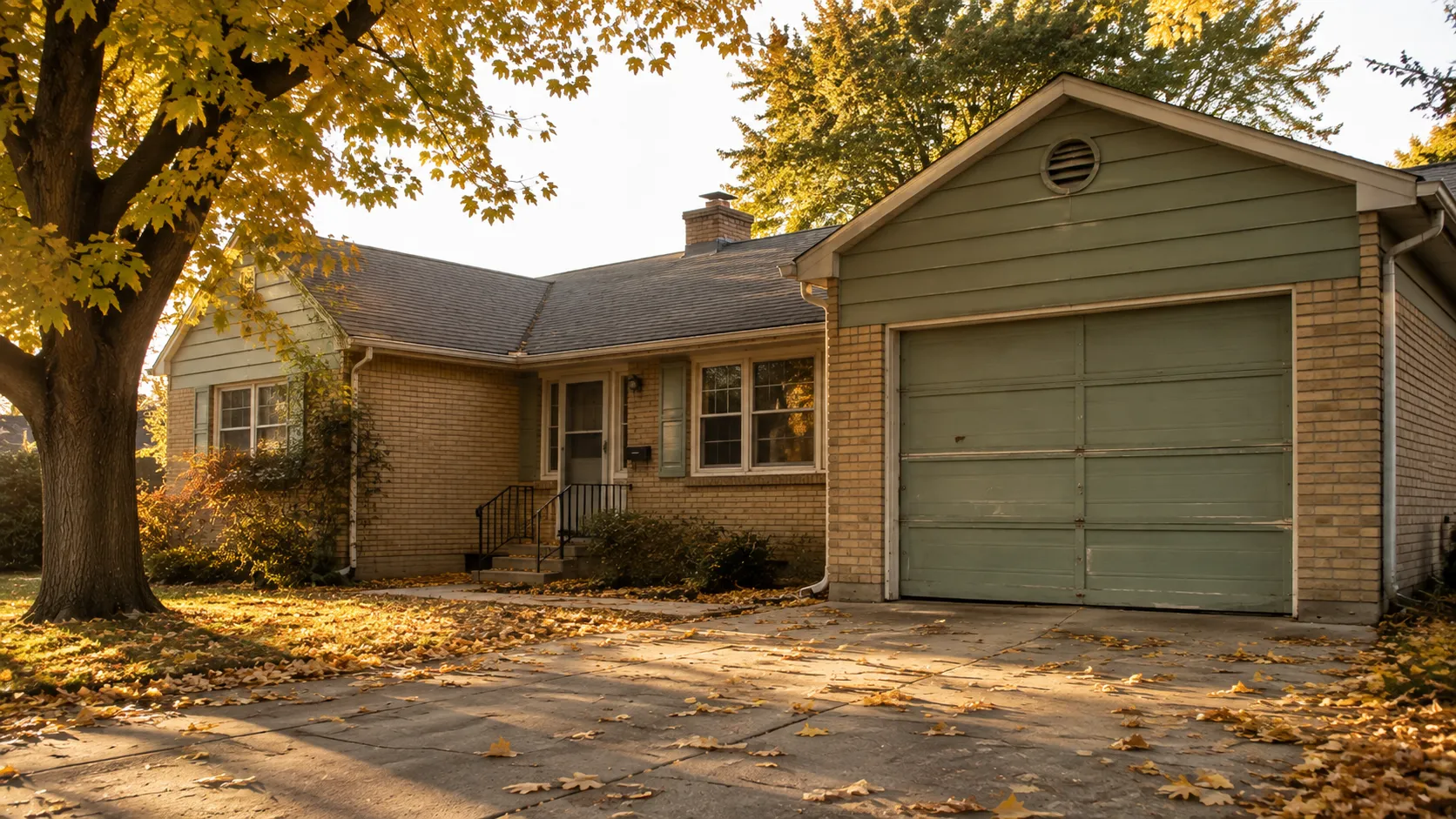
Because most houses in this area went up between 1940 and 2015 with the bulk of that stock dating to the 1980s and 90s, we're mostly dealing with the same generation of steel track and the same style of bracket hardware. That track was rolled to a spec that was fine for its day, but forty-plus years of use loosens the lag screws holding the vertical rail to the framing. Once a bracket shifts even slightly, the door no longer travels in a straight line, and every open-close cycle after that makes it worse.
It's not a mystery failure - it's metal fatigue and loosened fasteners doing what they do over decades. The fix is usually re-securing and realigning the track, not replacing the whole door, though if the rail itself is bent rather than just out of position, straightening it back to true isn't always worth the labor compared to a new section of track.
The area
How Local Conditions Play In
This area sits in a cold-severe climate band, and that matters more for track alignment than people expect. Steel track and the wood or masonry framing it's bolted to expand and contract at different rates through a hard freeze-thaw cycle. Over a winter, that differential stress works on the same lag bolts that are already loosened from age in a house built in the 1980s or 90s.
The result is a slow widening of the gap between track and jamb, a few thousandths at a time, until the rail leans out of plumb. Garage floors in this climate band also see frost heave at the slab edge, which can lift or tilt the floor track just enough that the bottom roller catches. None of this shows up as a single event - it shows up as a door that used to run quiet and now grinds on one side every winter.
What we find
Checking It Yourself
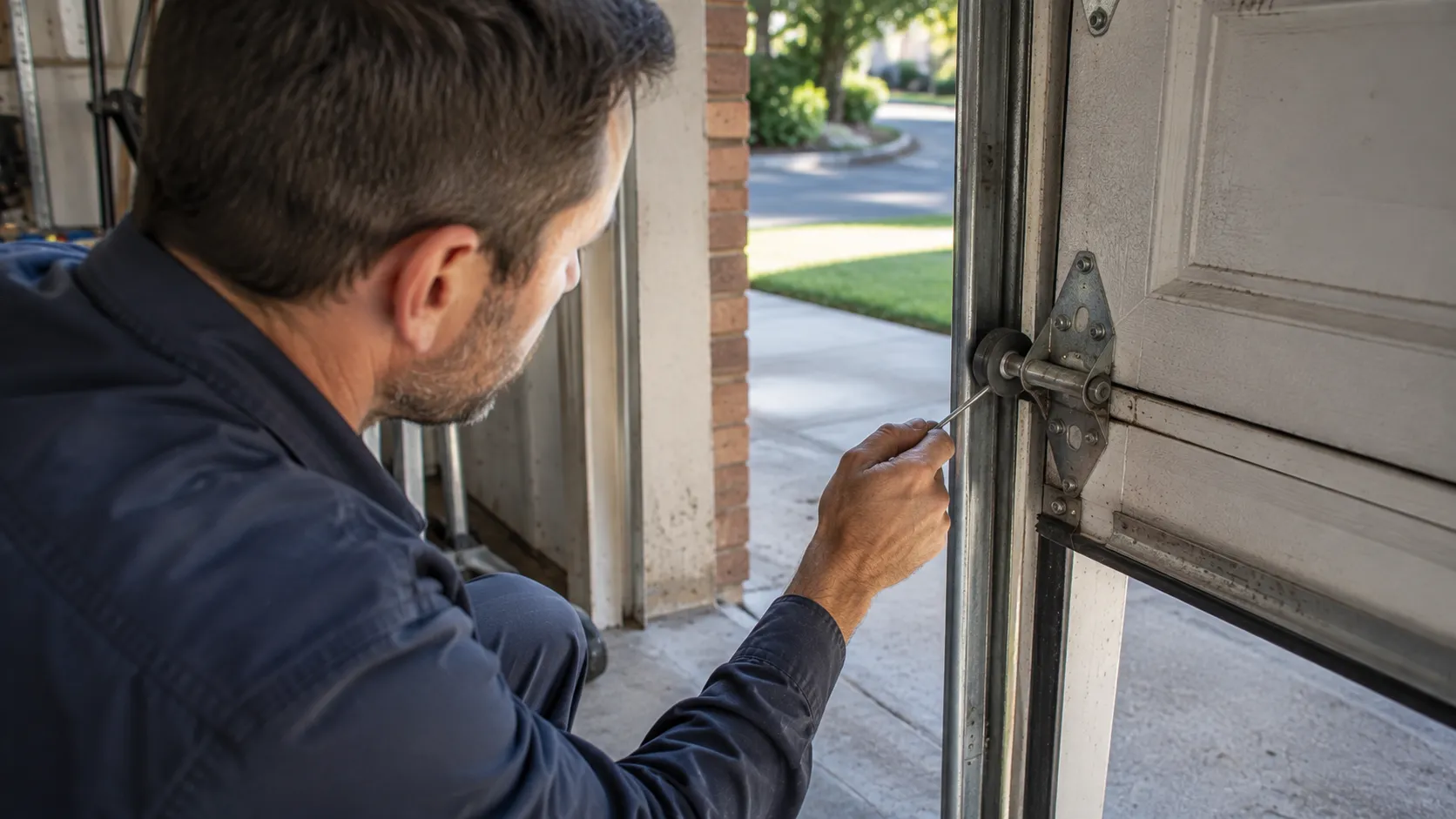
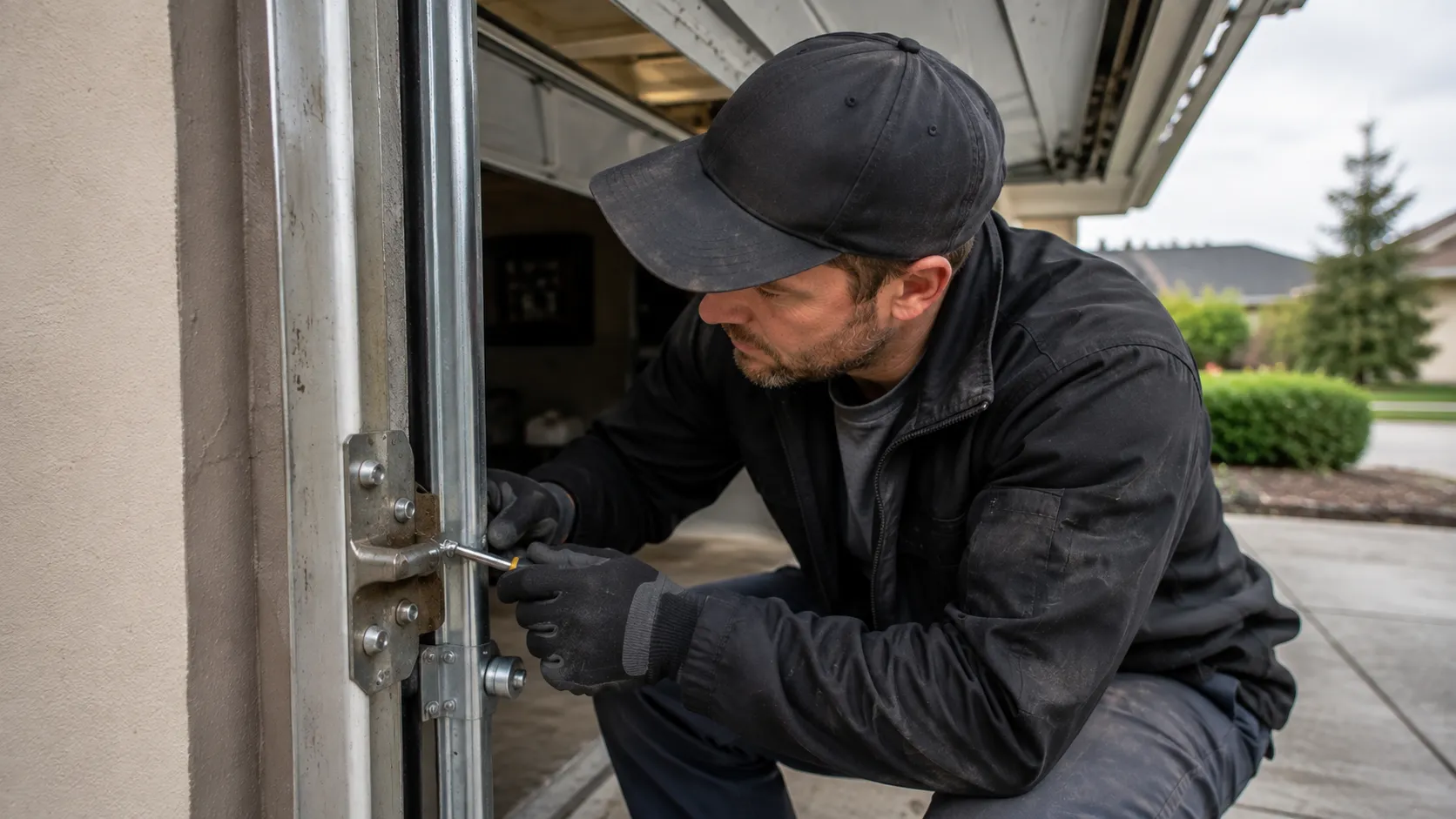
Open the door partway and look at the gap between each roller and its track - it should be even top to bottom on both sides. If one side pinches tight and the other has daylight, the track has shifted. Run your hand along the vertical rail (door closed, opener unplugged) and feel for any spot where it doesn't sit flush against the wall bracket; a loose lag bolt there is often the whole problem.
Check the horizontal track near the header too - sagging track is a common companion to off-track rollers in older stock. If you see a roller sitting outside the track channel, stop opening the door by opener or hand until it's reset; forcing it through another cycle can bend the rail further and turn a bracket job into a track replacement.
How we work
What Changes With the Season
Late fall through winter is when we see the most off-track calls tied to this climate. As temperatures drop, the steel rail contracts slightly faster than the wood framing it's fastened to, and any bracket that was already a little loose from age finally lets go.
Coming out of winter, thawing ground can shift a garage slab enough to throw the floor-level track out of level, especially on older homes where the slab has settled over the decades since the 1980s and 90s building boom here. If your door has run fine all summer and suddenly starts binding once the cold sets in, that's the pattern to expect, not a coincidence.
Questions
Common questions
Why does my door only go off track in winter?
Cold-severe winters here put stress on the joint between steel track and house framing. Metal contracts faster than wood, so a bracket that's marginal all year finally slips loose once temperatures drop, and the rail shifts out of alignment.
Is an off-track door always a full track replacement?
No. Most of the time it's a loose lag bolt or a bent bracket, and re-securing and realigning the existing track fixes it. Full track replacement only makes sense when the rail itself is bent, which we check for before recommending it.
My house is from the 1980s - is that relevant?
Yes. A large share of homes in this area were built in the 1980s and 90s, and that generation of track hardware is now decades past its original install. Loosened fasteners from that age combine with our cold winters to push tracks out of line more than in newer construction.
Can I just push the door back onto the track myself?
You can reset a roller that's popped out with the door disconnected from the opener, but if the rail itself is bent or a bracket is torn loose, forcing the door through another cycle risks bending it further. Better to stop and check the bracket first.
Ready when you are
Need a garage door sorted in Chantilly?
Chantilly Garage Door Pros repairs and installs garage doors, springs and openers in Chantilly, VA and the surrounding area.