
Guide
What We Actually Look At On A Chantilly Service Call
A Chantilly garage door service call checks springs, tracks, cables, and openers built for 1980s and 90s homes standing up to a cold Virginia winter, panel by panel.
Local detail
The Problem
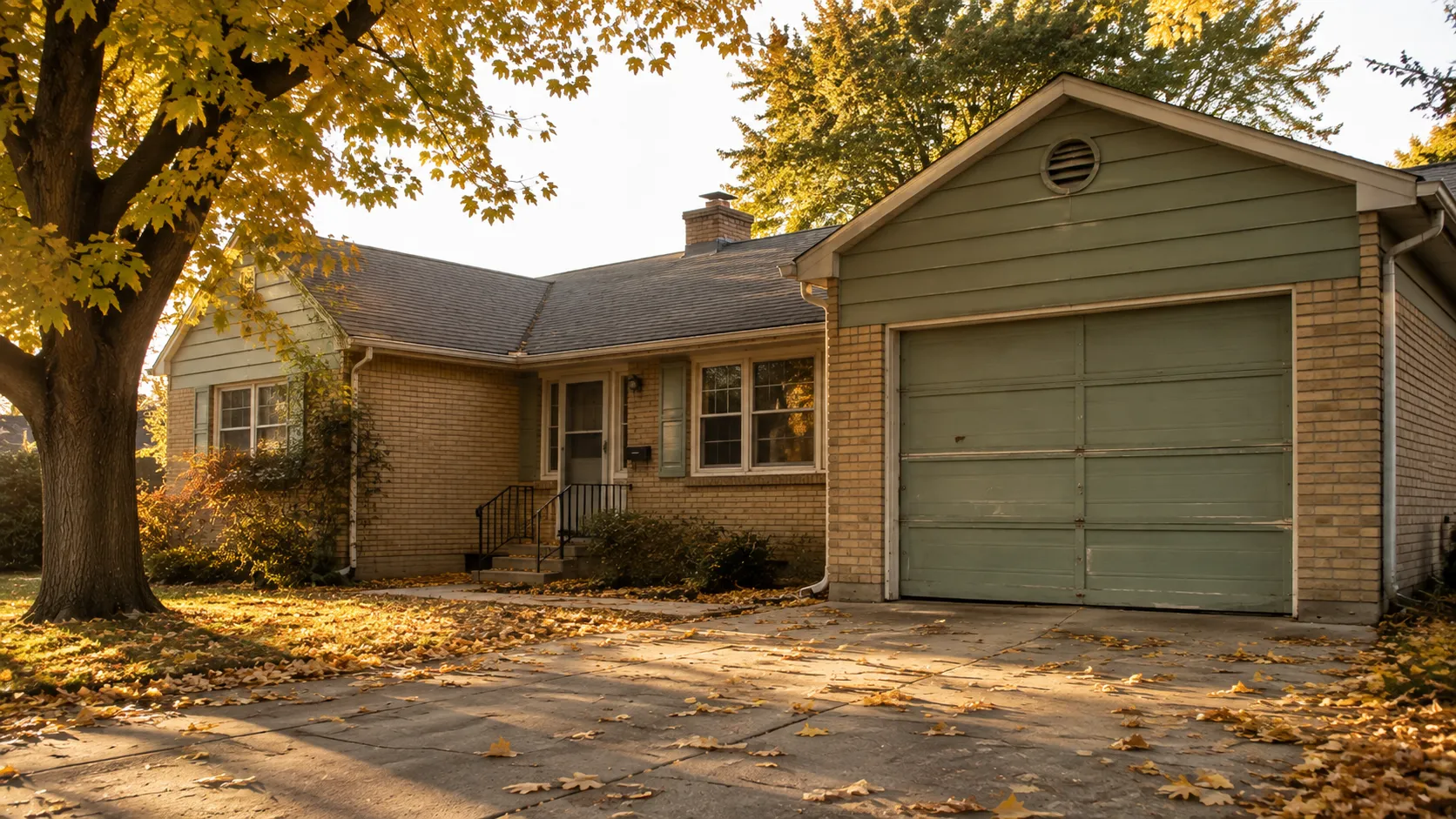
Most of the houses within a service call radius of Chantilly went up between 1940 and 2015, with the median sitting around 1981, so a lot of what we find on a truck run is original 1980s or 90s hardware - torsion springs, extension cables, and openers that have been running two or three decades longer than the manufacturer ever expected. That's the real problem behind most calls: not a mystery malfunction, just steel and plastic parts finishing out their working life at the same time, because the houses around here were mostly built in the same narrow window.
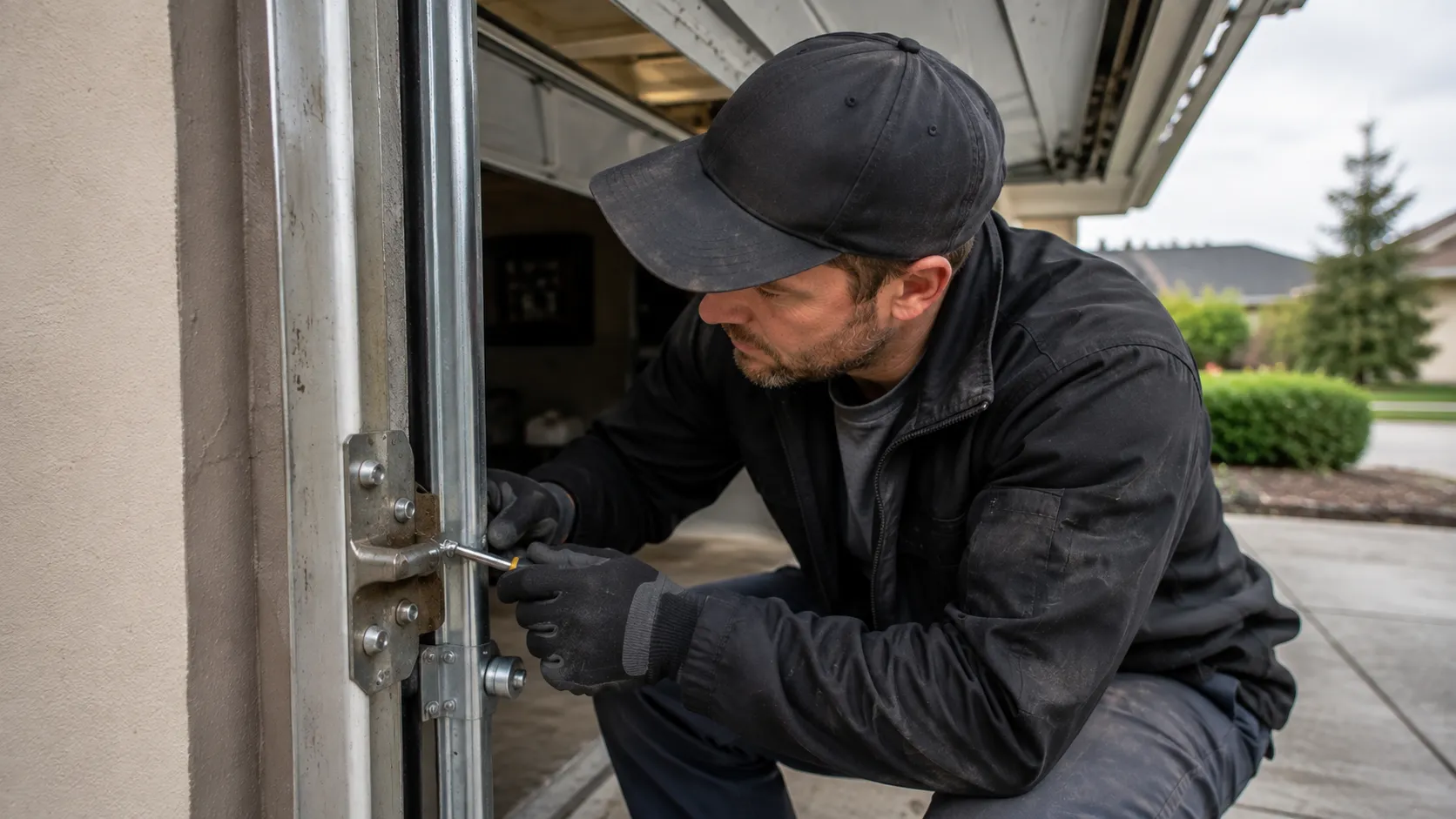
A service call starts by figuring out which of those aging parts is actually failing versus which one is just noisy. We check spring tension first, because a spring that's lost coil strength will make the opener strain on everything else downstream - rollers, hinges, the drive gear inside the unit. We don't always carry parts for every original opener model from that era, and sometimes that means a return trip once we know the exact part number. That's a real limit, not a sales pitch - we'd rather tell you that up front than pretend every 1985 opener has a drop-in replacement sitting in the truck.
The area
How Local Conditions Play In
Chantilly sits in a climate band the federal data marks as cold and severe, and that matters more to a garage door than most homeowners expect. Steel torsion springs contract in the cold, which changes how much force they deliver when the door lifts - a spring that felt fine in October can feel heavy and slow by January, not because it broke, just because cold steel behaves differently than warm steel. Lubricant on rollers and hinges thickens the same way, which is why a lot of winter calls start with 'it's grinding' rather than 'it's broken.'
Cold also works on the rubber: bottom seals and weatherstripping get brittle and can crack or pull away from the track over a hard winter, letting in the draft that makes a garage feel ten degrees colder than the house. On a service call we check the seal condition and the spring's resting tension together, because in a cold-severe climate those two things wear each other's symptoms - a bad seal can make a good spring look weak, and a weak spring can make a fine seal look like the problem.
What we find
Checking It Yourself
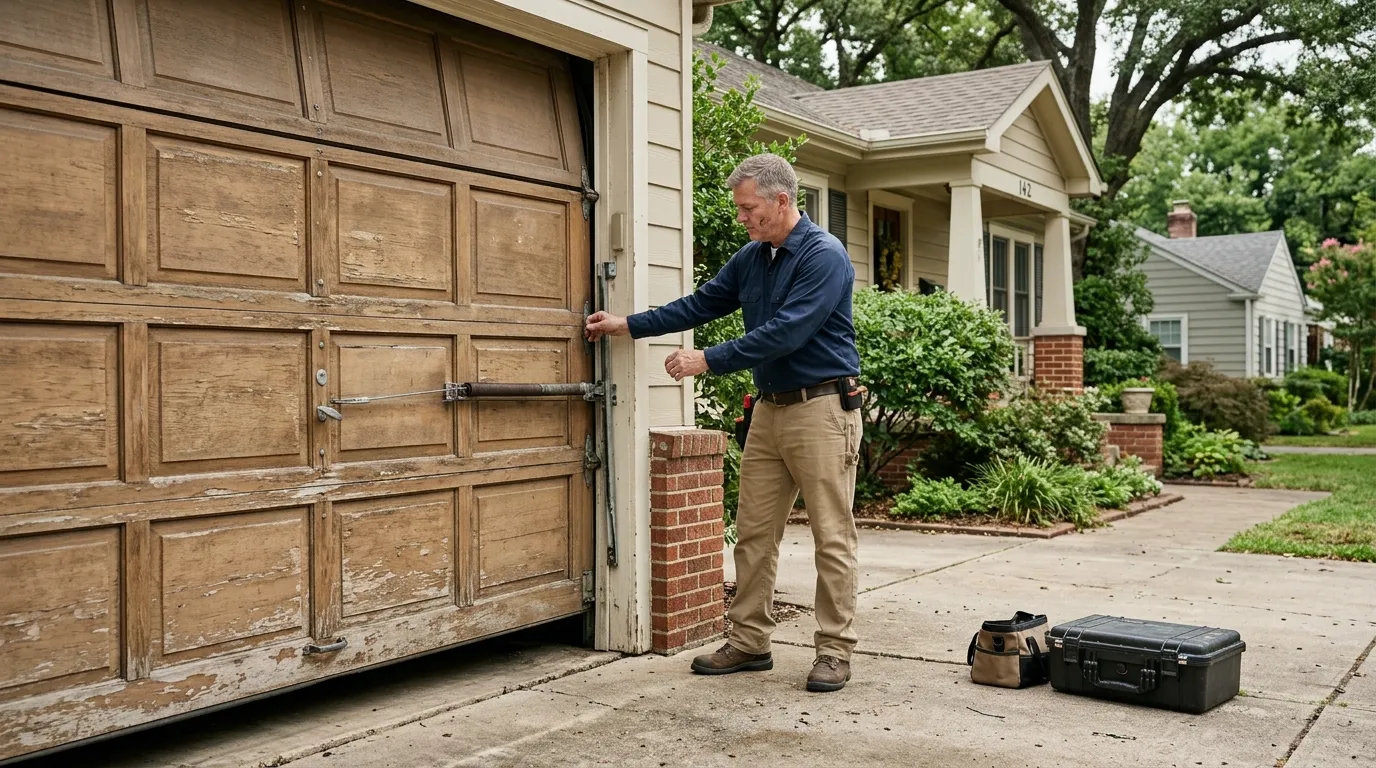
Before you call, a few things you can check yourself take five minutes and no tools. Pull the release handle with the door closed and lift it by hand - it should move smoothly with light, even resistance. If one side feels heavier or it wants to drop, that's a spring or cable balance issue, not something to force with the opener. Next, run the door and listen: grinding usually means a roller, a sharp bang usually means a cable or a broken spring letting go, and a slow groan is often just old lubricant gone stiff in the cold.
Check the bottom seal by looking for daylight along the edge when the door is closed - in a climate this cold, a gapped seal is worth fixing before the next hard freeze rather than after. Look at the springs themselves for visible rust or a gap between coils, which shows up more in houses from the 1980s and 90s that still have the original torsion setup. None of this replaces a proper inspection, but it tells you whether what you're dealing with is a five-minute adjustment or a parts problem.
How we work
What Changes With the Season
Cold is the season that shows up most in service calls out here, because a cold-severe climate band means real swings in what steel and rubber can do from one month to the next. As temperatures drop, torsion springs lose some of their working tension, opener motors have to work harder to compensate, and that extra strain is what turns a marginal spring into a broken one - usually on the coldest morning of the stretch, when the metal is least forgiving.
Lubricant is the other seasonal variable. What runs fine in warm months can gum up in the cold, adding drag that the opener reads as resistance and tries to push through, which shortens the life of the drive gear. We adjust for that on winter calls by checking whether the lubricant on the rollers and track is still doing its job or has gone thick enough to be part of the problem.
With 126,618 households and roughly 55,707 owner-occupied houses across the area we cover, most built in that same 1940 to 2015 stretch, the seasonal pattern repeats house after house - it's rarely one bad door, it's the whole housing stock aging through the same winters.
Questions
Common questions
How do I know if it's the spring or the opener?
Disconnect the opener using the manual release and lift the door by hand. If it's heavy, uneven, or wants to fall, that's a spring or cable issue. If it lifts smoothly by hand but the opener won't run it, the problem is in the opener or its wiring, not the spring.
Why does my door get slower every winter?
Chantilly sits in a cold-severe climate band, and torsion springs lose some tension as steel contracts in the cold. Lubricant also thickens. Together that adds drag the opener has to overcome, which shows up as a slower, heavier-feeling door until warmer weather returns.
My house was built in the 80s - is that why parts are hard to find?
A lot of the homes in this area were built in the 1980s and 90s, and original torsion hardware and openers from that window are reaching the end of a normal working life. We don't stock every discontinued opener part on the truck, so some jobs need a follow-up visit once we've confirmed the exact model.
Is it worth repairing an original door from that era or replacing it?
That depends on what's failing. A single worn roller or a cracked seal is usually a straightforward repair. A spring failure on a door that old, paired with an aging opener, is often the point where replacement makes more financial sense than patching one part at a time.
Ready when you are
Need a garage door sorted in Chantilly?
Chantilly Garage Door Pros repairs and installs garage doors, springs and openers in Chantilly, VA and the surrounding area.