
Guide
Why Weather Seals Matter So Much on a Chantilly Garage Door
Chantilly homes built mostly in the 1980s-90s face real cold-season draught problems at the garage door. Here's what to check before winter and why the seal matters here.
Local detail
The Problem
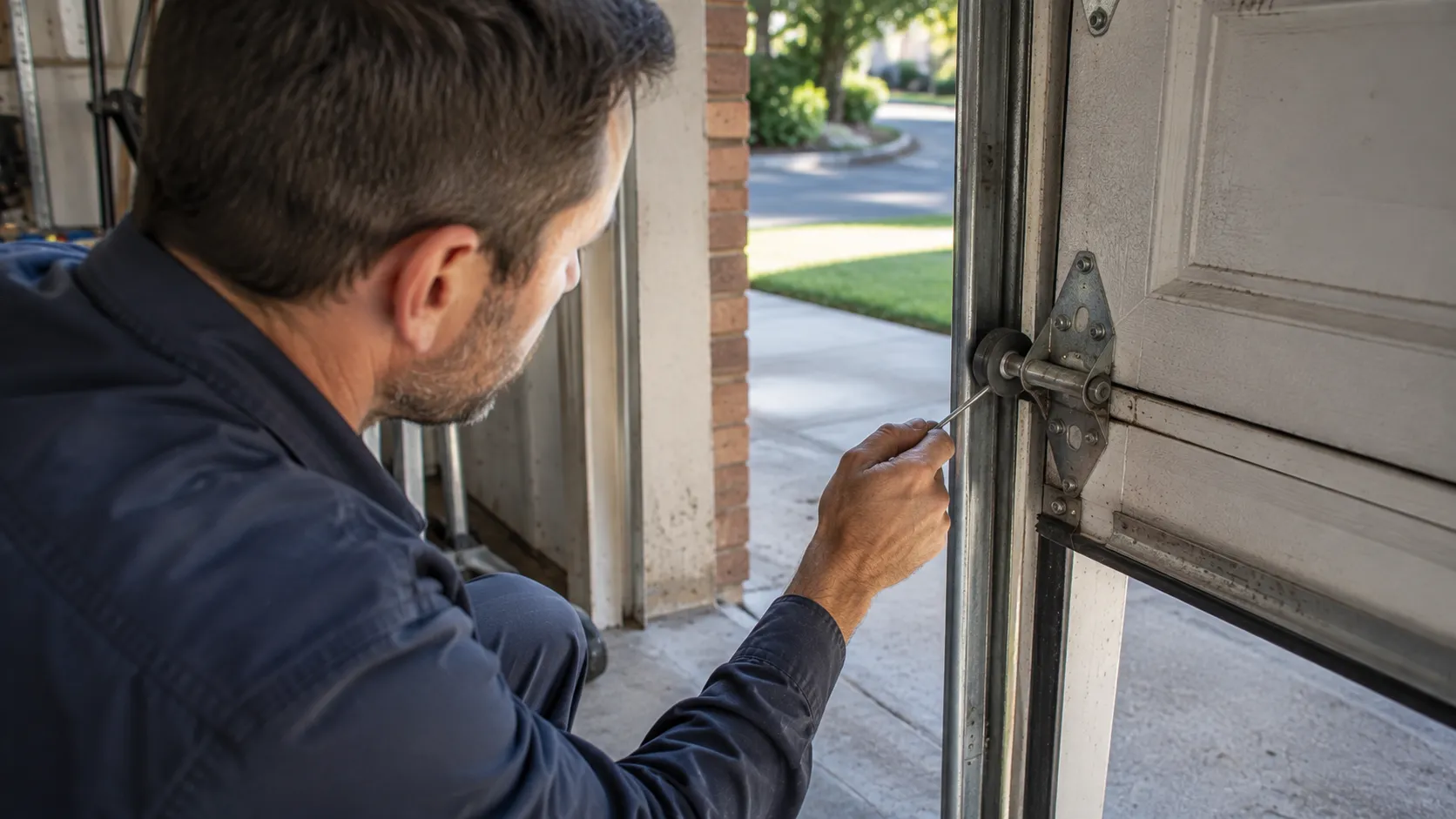
Most of the houses this service area sits in went up between 1940 and 2015, with the median build year landing around 1981, and the bulk of that stock clustered in the 1980s and 90s across the named areas nearby. That means a lot of garage doors here are original or one replacement removed from original, with bottom seals that were rated for a build code decades old. The rubber gasket at the base of the door hardens and shrinks over time, and once it pulls away from the slab even a quarter inch, cold air finds it. Owners notice this as a cold garage, a draft along the interior wall that backs onto the garage, or a wet line on the slab after wind-driven rain.
It is not usually the panel or the opener that fails first - it is the seal, and it fails quietly enough that most people don't check it until the room next to the garage stops holding heat. On a lot of these 1980s-built openings, the original track and seal channel weren't designed with today's foam-core doors in mind, so a straight seal swap sometimes needs a channel adjustment too. That is the honest limitation: not every seal replacement is a five-minute job on a house this age.
The area
How Local Conditions Play In
This area sits in a cold-severe climate band, which means the seal isn't cosmetic - it is doing real work for a good stretch of the year. A gap that would be a minor annoyance somewhere milder becomes a measurable heat loss point here, and it's also where moisture gets in during freeze-thaw swings, which can rust the bottom bracket or warp a wood-composite panel from the inside out.
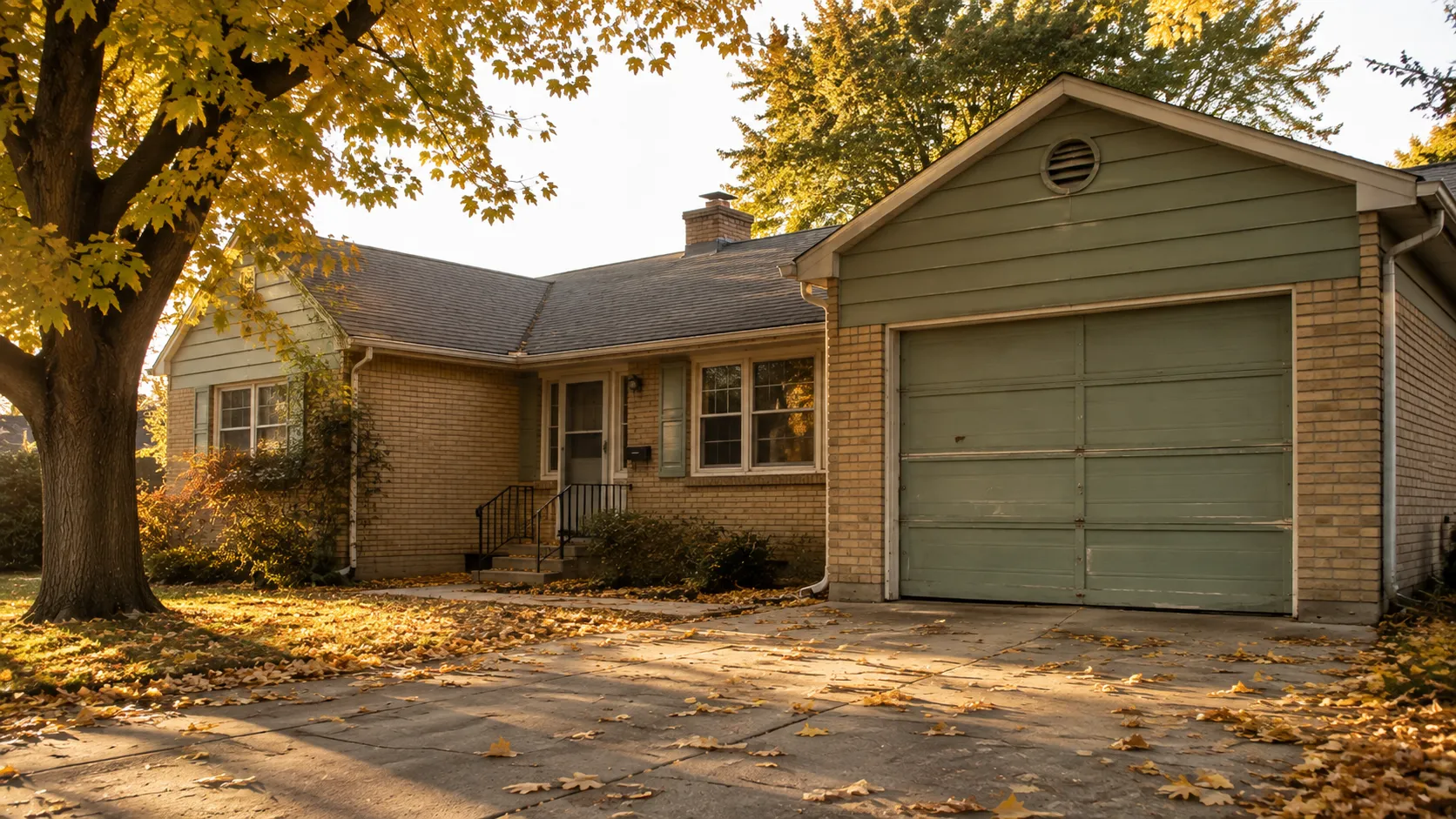
Houses built in the 1980s and 90s, which describes most of the stock across the 32 named areas in this service footprint, were built to the insulation standards of that era - standards that assumed a tighter, newer seal than what's likely sitting on that door today. The combination of an aging seal and a genuinely cold winter is what turns a small gap into a real utility and comfort problem, not just an eyesore.
What we find
Checking It Yourself
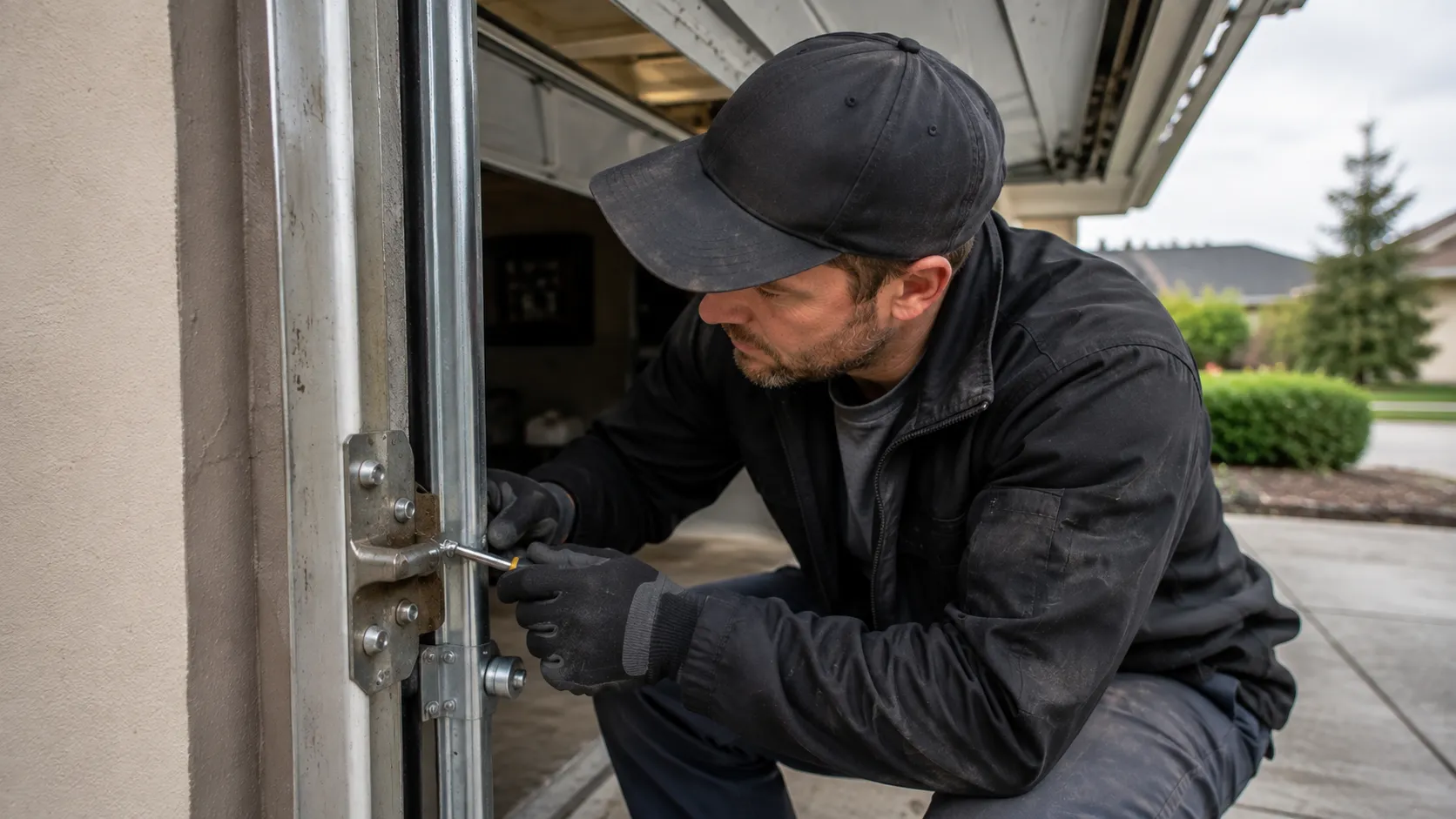
Close the door at night and run a hand along the bottom edge from inside the garage - if you can feel outside air anywhere along that line, the seal has already failed at that point. A flashlight test works too: kill the garage lights, close the door, and look for daylight or streetlight leaking under the bottom edge or around the side jambs. Check the corners first; that's where a seal on an older track system usually gives out before the center does.
Also look at the seal itself for hardening, cracking, or a flattened profile - rubber that's lost its round shape has lost its seal. If your house falls into that 1980s-90s build window that describes most of this area's stock, and you haven't touched the bottom seal, it's worth the five minutes to look before the cold sets in hard.
How we work
What Changes With the Season
In a cold-severe climate, the seal that was fine in October can be a problem by January - cold makes rubber contract and go rigid, which is exactly when it stops hugging the slab. If you're already seeing a gap in mild weather, expect it to open wider once temperatures drop for good.
This is also when houses on the older end of the 1940-2015 build range, especially anything closer to that 1981 median, tend to show their age at the garage door first, since the door and its seal usually weren't upgraded on the same schedule as the roof or windows. Waiting until a hard freeze to deal with a seal that's already failing usually means dealing with a stuck or frozen door on the coldest morning of the year, not a scheduled fix on your own timeline.
Questions
Common questions
How do I know if my garage door seal needs replacing?
Run your hand along the bottom edge with the door closed at night, or turn off the garage lights and look for light leaking under or around the door. Hardened, cracked, or flattened rubber has already lost its seal. In a cold-severe climate like this one, catching it before winter matters more than catching it after.
Why does my garage feel colder than it used to?
On houses from the 1980s-90s build era common across this area, the original bottom seal and track were built to a standard from decades ago. As the rubber ages and shrinks away from the slab, cold air gets in steadily rather than all at once, which is why the change can feel gradual rather than sudden.
Is a seal replacement always simple on an older door?
Not always. On some 1980s-era doors the seal channel and track weren't built for the foam-core doors common today, so a straight swap sometimes needs a channel adjustment as well. It's worth having it checked rather than assuming a universal seal will fit.
Ready when you are
Need a garage door sorted in Chantilly?
Chantilly Garage Door Pros repairs and installs garage doors, springs and openers in Chantilly, VA and the surrounding area.