
Guide
When the Power Cuts Out, Your Opener Tells You Why
How openers in Chantilly homes react to winter power cuts, why the local housing stock and cold-severe climate matter, and what an owner can check before calling.
Local detail
The Problem
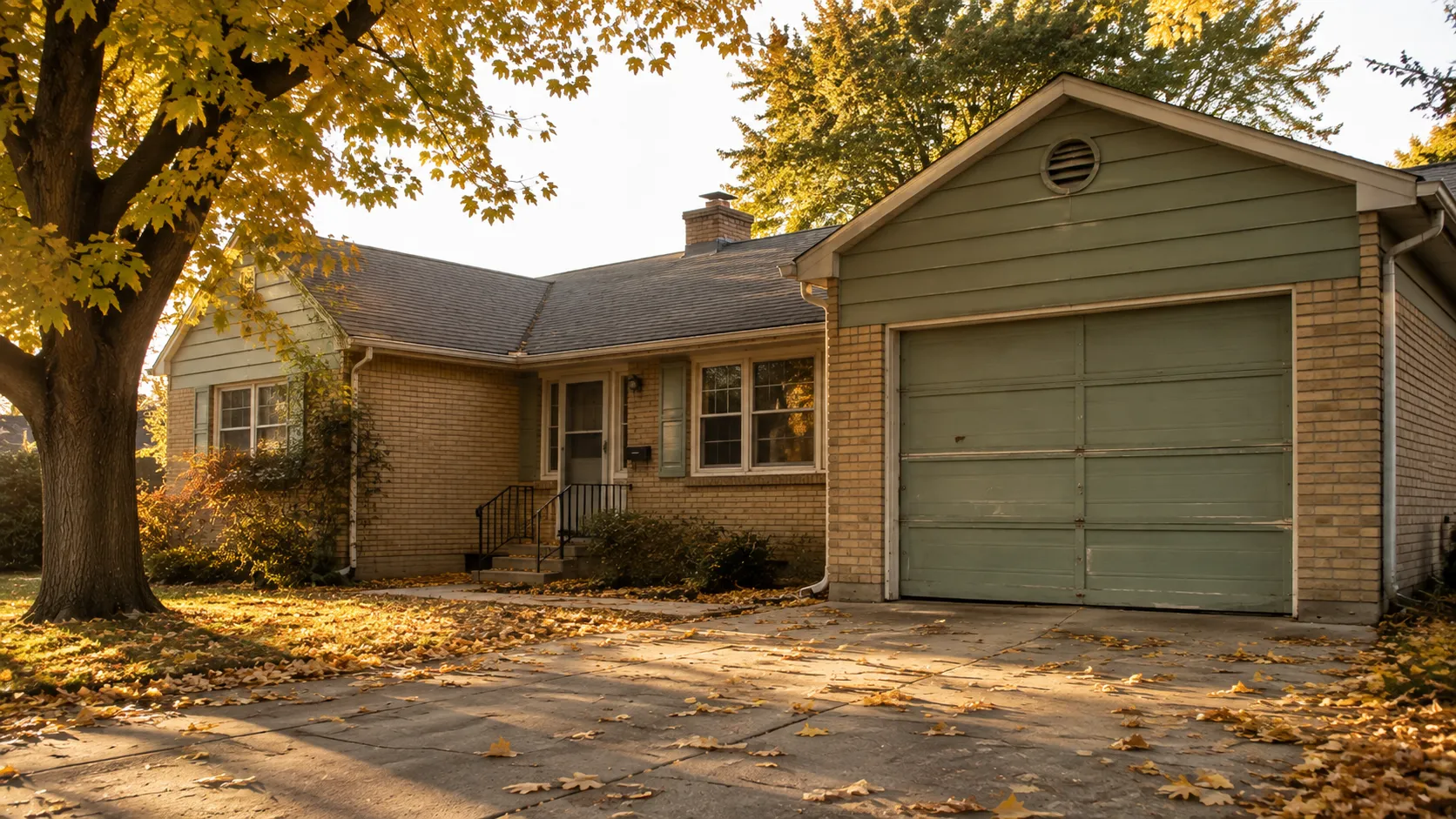
Chantilly's housing stock runs from 1940 through 2015, with the median build year sitting at 1981, and most of the area's 32 named neighborhoods filled in during the 1980s and 90s. That matters more than it sounds like it should. Openers installed during that build-out are now 30 to 40 years old in a lot of these houses, and even where the door itself got replaced, the opener behind it often didn't.
When a power cut hits, an opener from that era just stops - no battery backup, no memory of position, nothing. The homeowner's first instinct is usually to blame the door. It's almost never the door.
It's the opener losing power and, on older units, losing its programmed limits when power comes back on. With 55,707 owner-occupied houses across the wider service area, a good share of them are running an opener that predates battery backup as a standard feature. That's the actual problem: not that the door won't move, but that the opener has no way to ride out a cut, short or long, without help.

The area
How Local Conditions Play In
This area sits in a cold-severe climate band, and that changes what a power cut does to an opener versus what it would do in a milder region. Cold temperatures slow the chemical reaction inside any battery backup, so a unit that holds a charge fine in October can drop to a fraction of its rated runtime in a January cut. If your opener already has backup, expect it to underperform exactly when you need it - during a winter outage, not a summer one.
For openers without backup at all, the cold adds a second problem: the drive gear and lubricant inside older units stiffen up, so even a manual pull after a power cut can feel harder than it should. None of this is unique to any one house. It's a function of the climate band this whole area sits in, combined with how old a lot of the openers still running here actually are.
A newer opener with a cold-rated battery backup handles a winter power cut without much drama. An original-to-the-house opener from the 1980s or 90s usually doesn't.
What we find
Checking It Yourself
Before you call anyone, there are a few things worth looking at yourself. First, find the manual release cord - the red handle hanging from the trolley on the track - and pull it during a power cut to confirm the door still moves by hand. If it doesn't move freely, that's a spring or track issue, not a power issue, and it's worth noting separately.
Second, check whether your opener has a battery backup unit at all; it's usually a small box mounted next to the main opener head, sometimes with an LED. If there's no box, you're running on wall power only, full stop. Third, if there is a backup, check when it was last replaced - most backup batteries are rated for three to five years and lose capacity well before they die outright, especially with regular cold exposure.
Write down the opener's brand and model number, visible on a sticker on the housing, before you call anyone. That one detail saves a return trip more often than any other piece of information you can hand over.
How we work
What Changes With the Season
Winter is when opener-related power cuts actually show up as service calls in this area, and it's not close. Cold-severe conditions mean the grid takes more hits from ice and heavy snow load on lines, and that's exactly when an aging or backup-less opener gets exposed. Spring and fall are quieter - milder temperatures mean any battery backup that does exist performs closer to its rated spec, and outages themselves are shorter and less frequent.
Summer brings its own version of the same problem in reverse: heat stress on the grid causes its own cuts, but battery chemistry runs warmer and holds charge better, so the failure looks different - slower opener response rather than total failure. If you're deciding when to deal with an opener that's been acting up during outages, cold season is when it will fail hardest and fastest. Getting ahead of it before the first real cold snap is worth more than doing it mid-winter, if you have the choice.
Questions
Common questions
Will my garage door opener work at all during a power cut?
Only if it has a battery backup unit installed and that battery still holds a charge. Without one, the opener has no power source and won't respond to the remote or wall button until utility power returns. The manual release cord will still let you open the door by hand regardless.
Why does my opener seem worse in winter power cuts than summer ones?
Cold temperatures reduce how much charge a battery backup can deliver, which is part of why this area's cold-severe climate band matters. A backup that runs fine in warm weather can underperform sharply once temperatures drop, right when winter outages are more likely.
My house was built in the 1980s - does that affect this?
It can. A lot of the housing stock in this area dates to the 1980s and 90s, and openers from that build era typically don't include battery backup as a standard feature. If yours hasn't been replaced since, a power cut likely stops it cold rather than switching to backup power.
Is it worth adding battery backup to an older opener?
That depends on the opener's age and condition overall - sometimes the drive unit itself is old enough that replacing the whole opener makes more sense than adding backup to it. We can look at the model and give you a straight answer rather than sell you an add-on that outlives the opener it's bolted to.
Ready when you are
Need a garage door sorted in Chantilly?
Chantilly Garage Door Pros repairs and installs garage doors, springs and openers in Chantilly, VA and the surrounding area.