Great Falls, Chantilly

Panel Replacement for Great Falls Garage Doors

Panel damage on a Great Falls garage door often traces to 1980s steel stock. We match panels and travel from Chantilly to fix it right.

Panel Replacement for Great Falls Garage Doors in Chantilly
Serving Chantilly, VABackground-checked techsHonest, upfront pricingFast local response

On the truck

What Is on the Truck

Chantilly's own housing runs older on average, with a median build year of 1981 across the wider service area. Great Falls sits a few years newer at 1985, and that gap matters more than it sounds.

Thicker gauge mid-80s panels

A door built in the mid-80s is usually a later-generation steel panel - thicker gauge, sometimes a first pass at foam-backed insulation - rather than the thin single-skin steel or wood-composite panels common on the earliest 1940s-60s stock nearby.

Era-matched panel hardware

That changes what we load before we drive the 11 miles out. For a Great Falls job we bring panel sections sized for those mid-80s door widths and the fastener patterns that generation used, plus the torsion hardware that fits a heavier insulated panel instead of the lighter original gear.

Age description impacts loading

Guessing at stock before we know the era wastes the trip for everyone, so a quick description of the door's age and section height helps us load right the first time. We don't keep a depot in Great Falls - every job runs from Chantilly - but the truck goes out stocked for exactly this housing band, not a generic mix.

The repair

What the Repair Takes

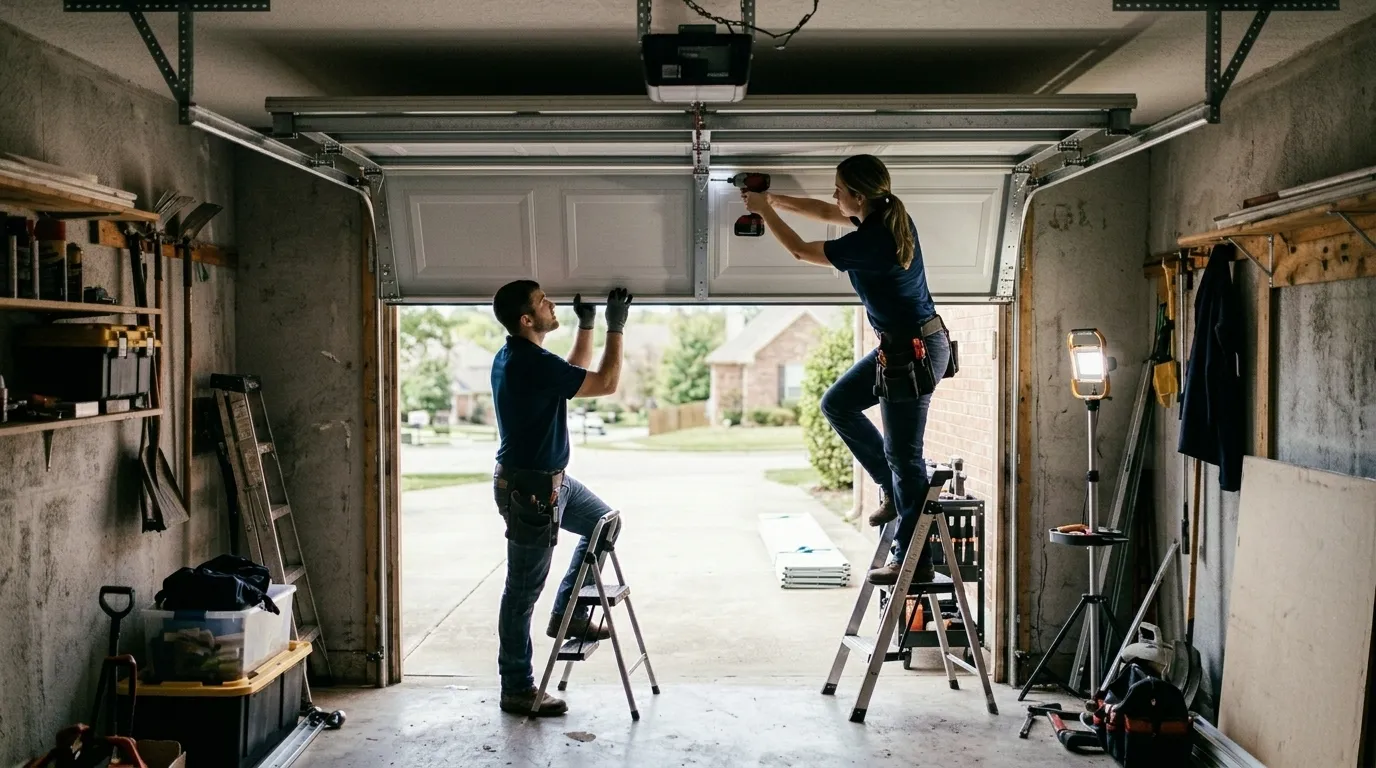
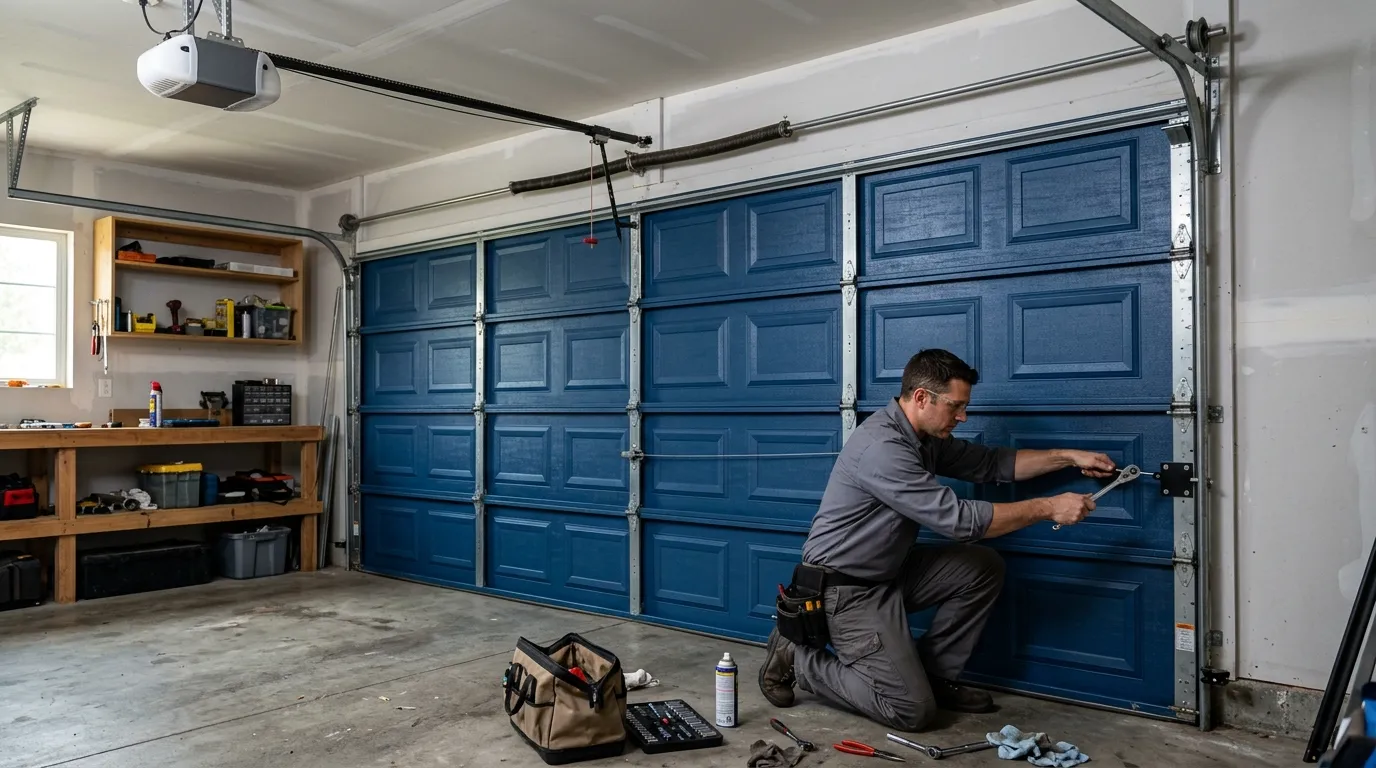
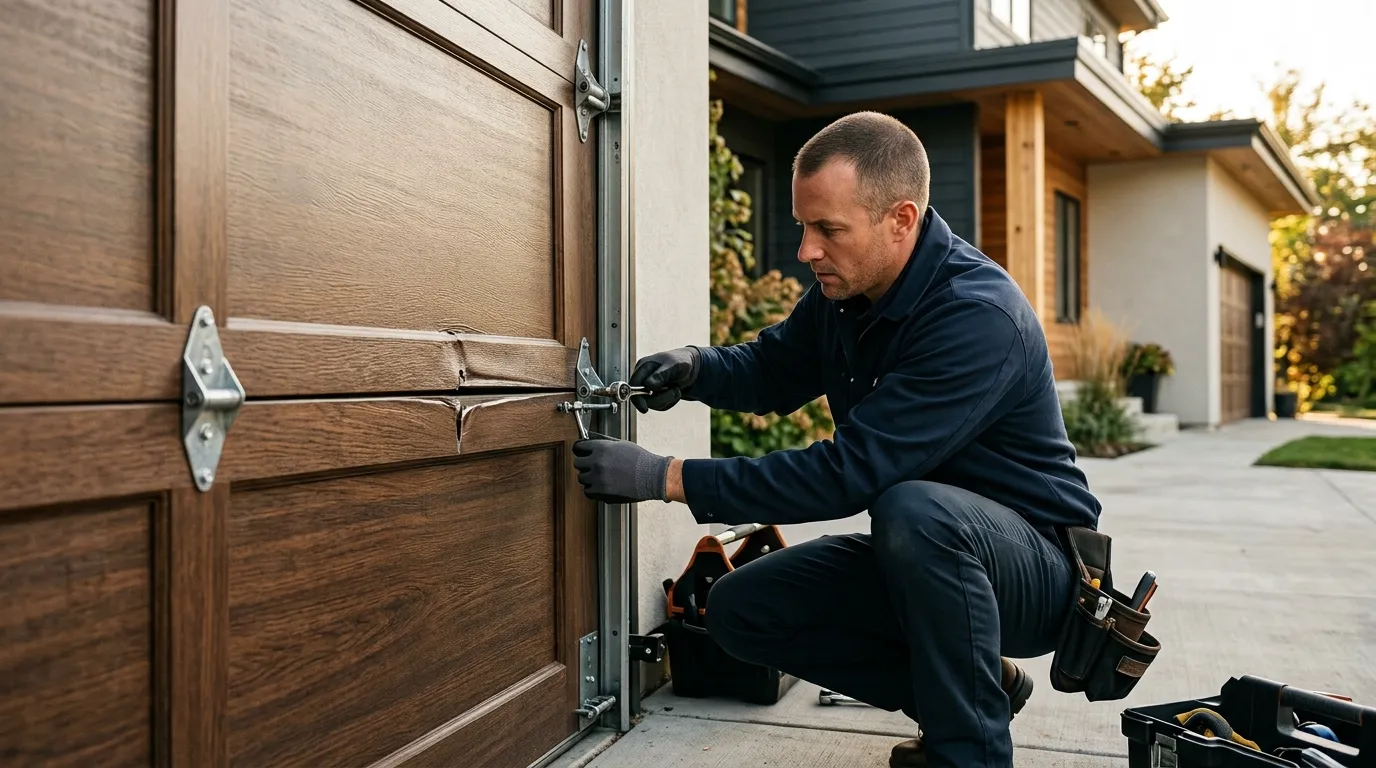
A single damaged section on a mid-80s insulated door is a different job than a bent panel on a 1960s single-skin door. The newer panel is heavier, so the torsion spring has to be checked against the new total door weight, not just swapped like-for-like. We pull the damaged section, check the tracks for the ding that usually comes with it - a car bumper catch bends the roller track along with the panel, and skipping that check means the new panel jams within weeks. If the door is old enough that the exact panel profile is out of production, we match by section height and hinge spacing rather than by brand, which is usually close enough that the color and grain read the same from the driveway. Full-door color match across a 30-plus-year-old finish sometimes isn't possible, and we'll say so before we start rather than promise a seamless blend we can't deliver.

What the Repair Takes

Warning signs

What You Are Seeing

On a door from this build era, panel failure usually shows as a horizontal crease across one section, a corner punched in at the bottom panel near ground level, or a seam that's split where the foam core meets the steel skin after years of temperature swing.

Freeze-thaw bond failure

This region sits in a cold, severe climate band, and the freeze-thaw cycle works on that seam every winter - steel contracts faster than the foam behind it, and over enough cycles the bond lets go at the edge first.

Corner warp and daylight

If you're seeing daylight at a panel seam that wasn't there last year, that's the cold doing its slow work, not a one-time impact. A door that won't sit flush at the bottom corner even when closed is usually a panel that's already bowed from repeated stress at the same weak point.

Where This Job Goes Sideways

Watch-outs

Where This Job Goes Sideways

The most common misstep is ordering a replacement panel by door brand alone. Section height, hinge spacing, and end-stile width all shifted across manufacturers even within the same decade, so a panel that's the right brand and the wrong dimension by half an inch won't seat. The second is skipping the spring recalculation - swap in a heavier insulated panel without adjusting torsion tension, and the opener starts working against a door it wasn't set up for, which shortens the opener's life fast. Given the income profile here - median household income over $250,000 puts a lot of these doors on higher-spec openers and full two-car sections - the repair bill for getting the spring wrong later is usually worse than the panel job itself. We check spring math on every panel swap regardless of what the door looked like when we pulled up.

Pricing

The Cost of This Job

We don't quote panel replacement blind, and we're not going to post a number here that doesn't hold once we've seen the actual section and confirmed it's still made.

Profile production and matching

What we can tell you is what drives the number: whether it's one section or several, whether the exact profile is still in production or has to be matched, and whether the spring needs re-tensioning for a heavier panel than the door originally carried.

Discontinued color match labor

A single matched section on a door that's still in production is a straightforward job. A full-color match across an older, discontinued run costs more in search time than in labor. We'll give you the real number on site before any work starts, not a range that moves once we're in the garage.

What Causes It Around Here

Local causes

What Causes It Around Here

Most of the panel damage we see out this way traces back to two things: cold-cycle seam separation on doors from the 1980s insulated generation, and impact damage at the bottom section from vehicles or equipment in driveways sized for the era. Household density here is lower than the denser 1980s-90s tract pattern seen across much of the wider service area, which usually means longer driveways and more backing-and-turning near the door - more chances for a bumper tap at the bottom panel. Combine that with 30-plus years of a cold, severe climate cycling the foam-to-steel bond, and the two failure points we see most in Great Falls are exactly the two we described above: a cracked seam near the top of a section, or a punched-in corner low on the door.

Questions

Common questions

Can you match my panel color even if the door is older?

Sometimes, but not always. Steel finishes fade and grain patterns change across production runs, so a panel bought today next to a 30-year-old section may be close but not identical. We'll tell you honestly how close the match will look before we order anything.

Do I need a new spring if I only replace one panel?

Depends on the weight difference. If the new section is a heavier insulated panel than what was on the door, the torsion spring is usually under-tensioned for the new total weight, and we adjust it as part of the job so the opener isn't straining against a mismatch.

Is it cheaper to replace the whole door instead of one panel?

If the panel is discontinued and multiple sections are already showing wear, a full door often costs less than chasing a match for one section. We look at the whole door before quoting a single-panel job so you're not paying twice.

Do you have a shop in Great Falls?

No. We run this job from Chantilly, about 11 miles out. There's no local depot or drop-off point here, but the truck is stocked for the panel sizes and hardware common to this area's housing before we drive out.

Ready when you are

Need a garage door sorted in Chantilly?

Chantilly Garage Door Pros repairs and installs garage doors, springs and openers in Chantilly, VA and the surrounding area.

Call Now(571) 701-6142