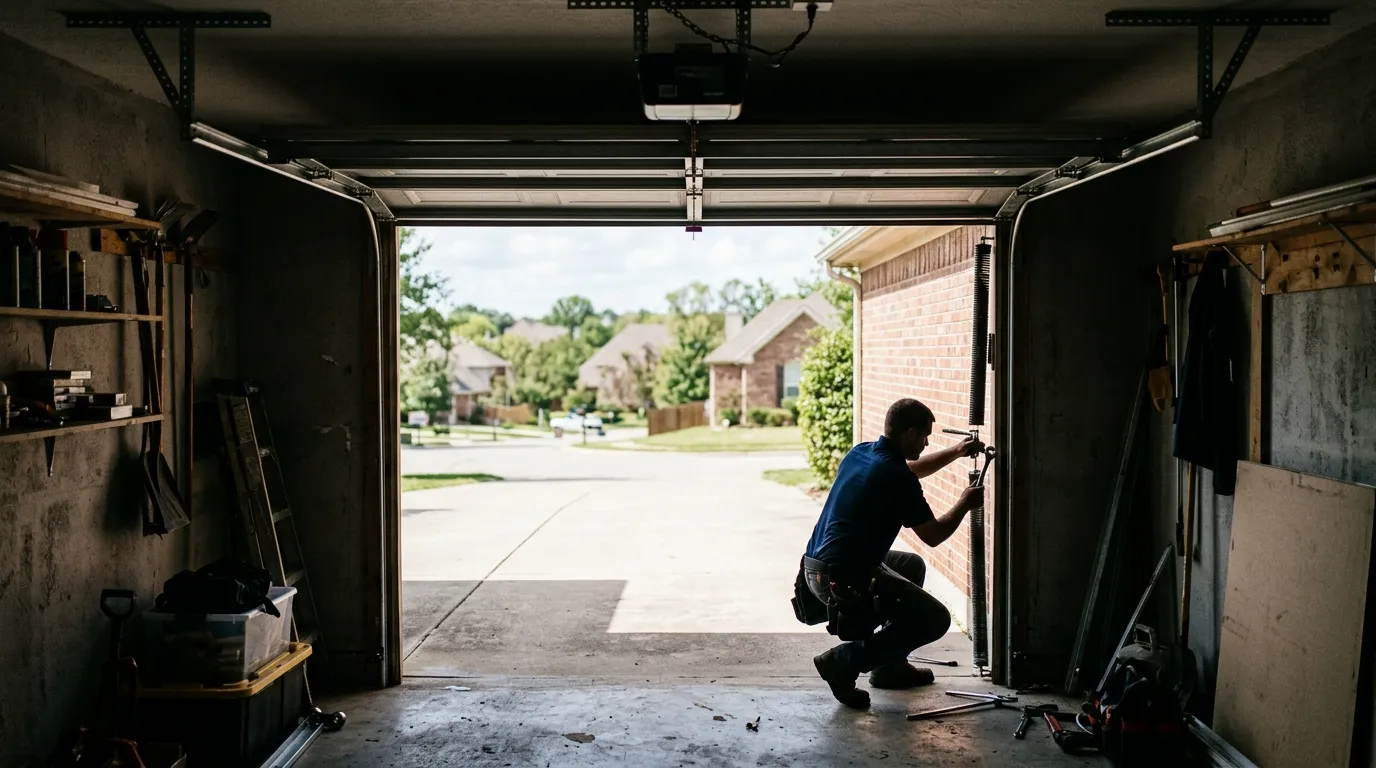
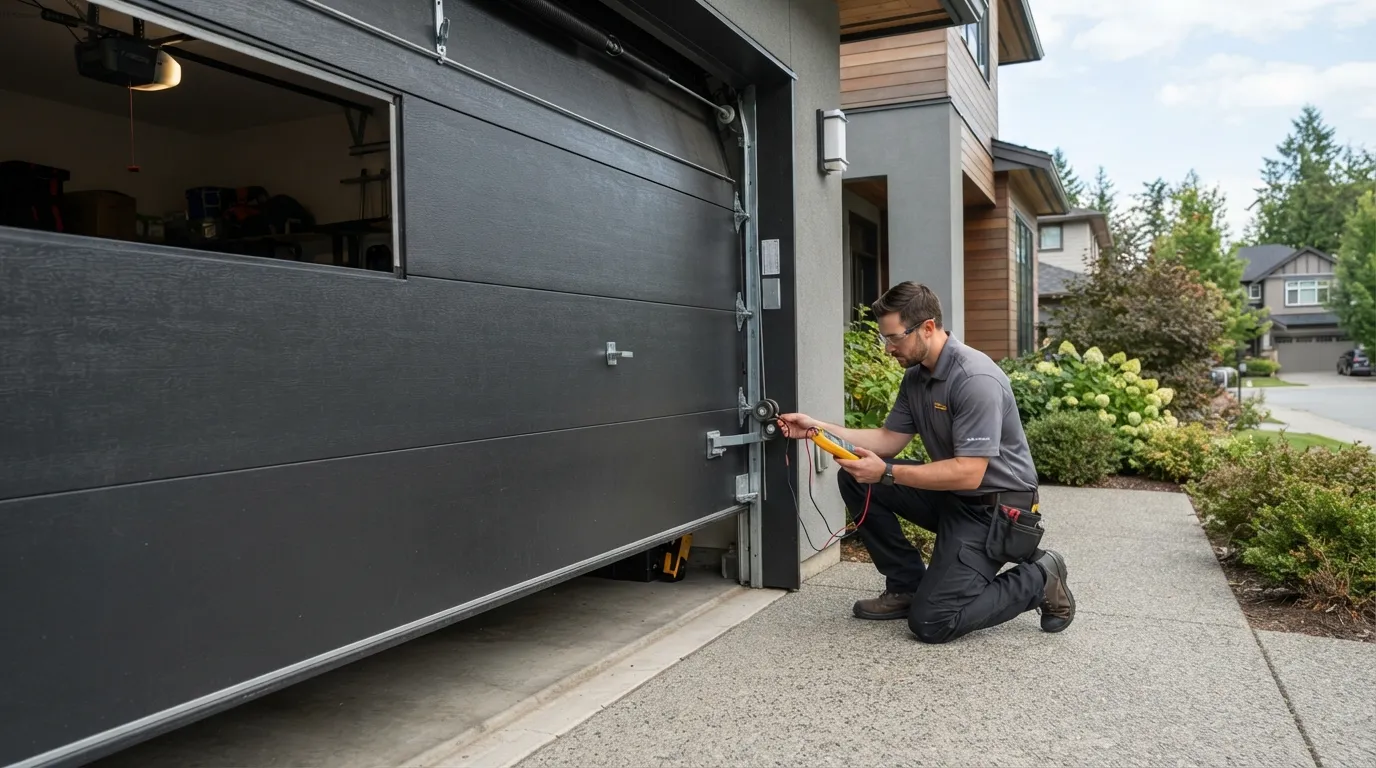
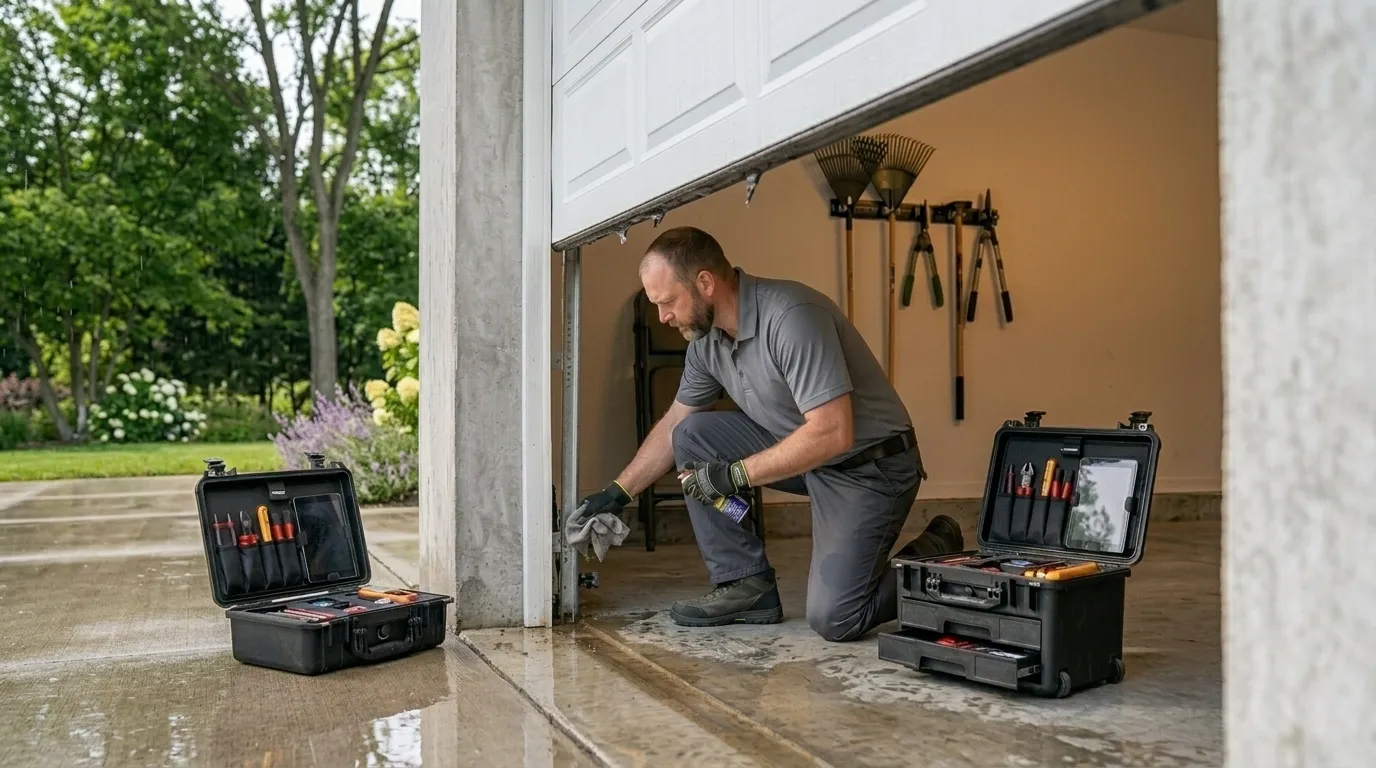
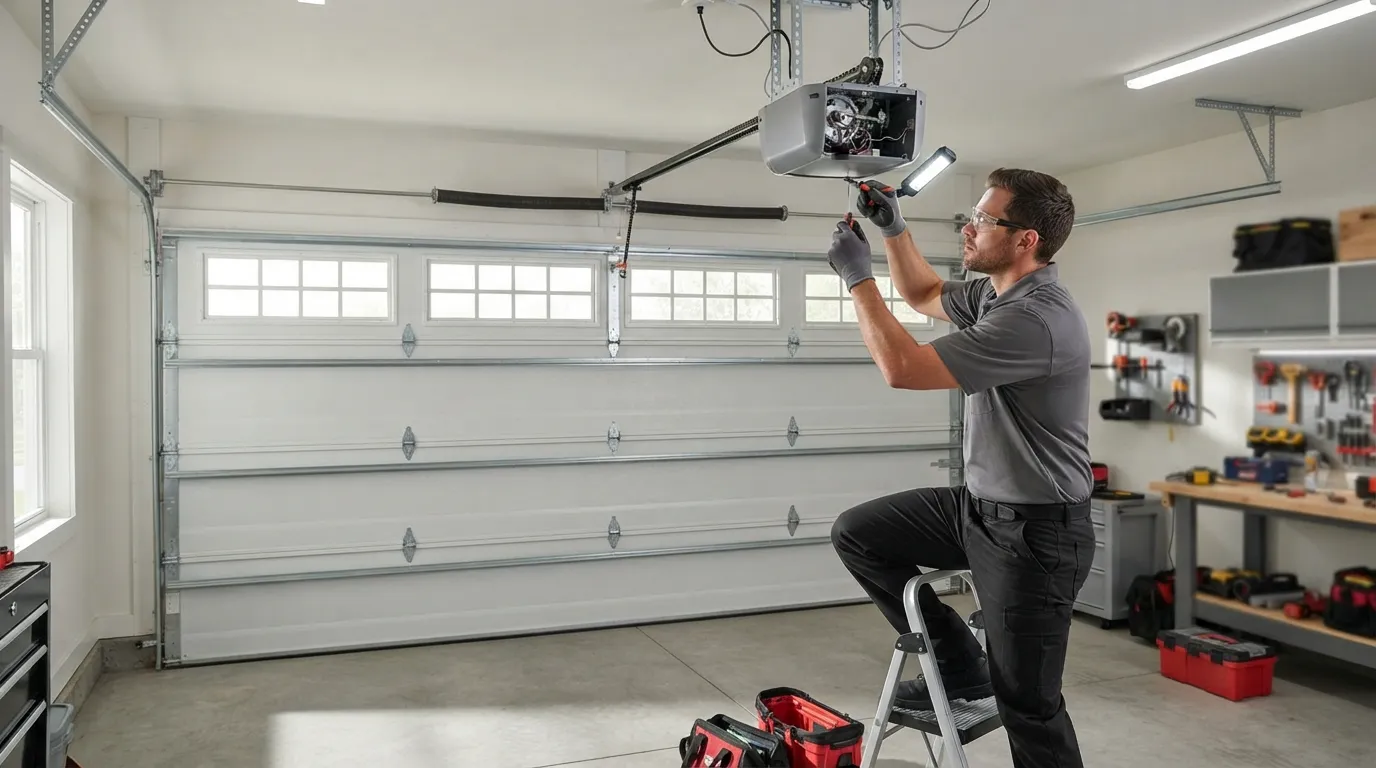
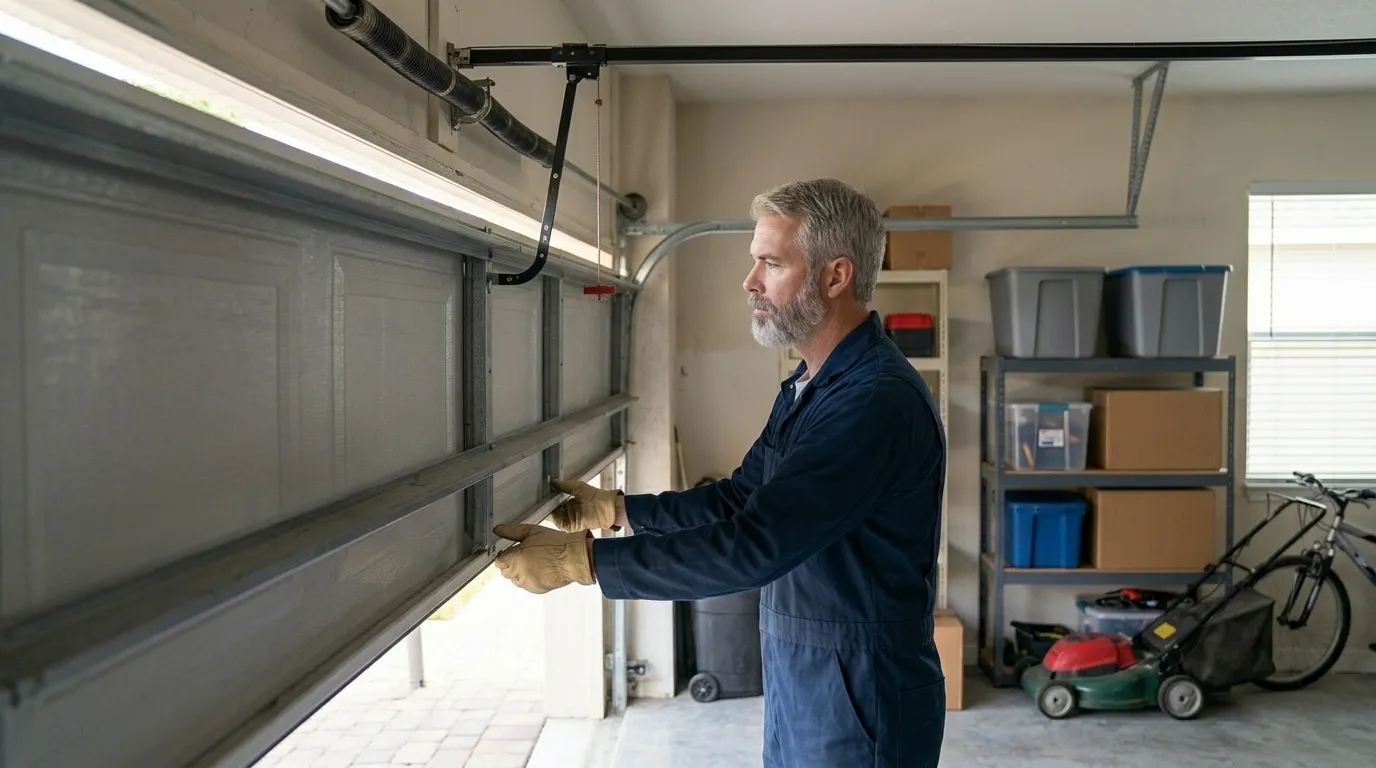
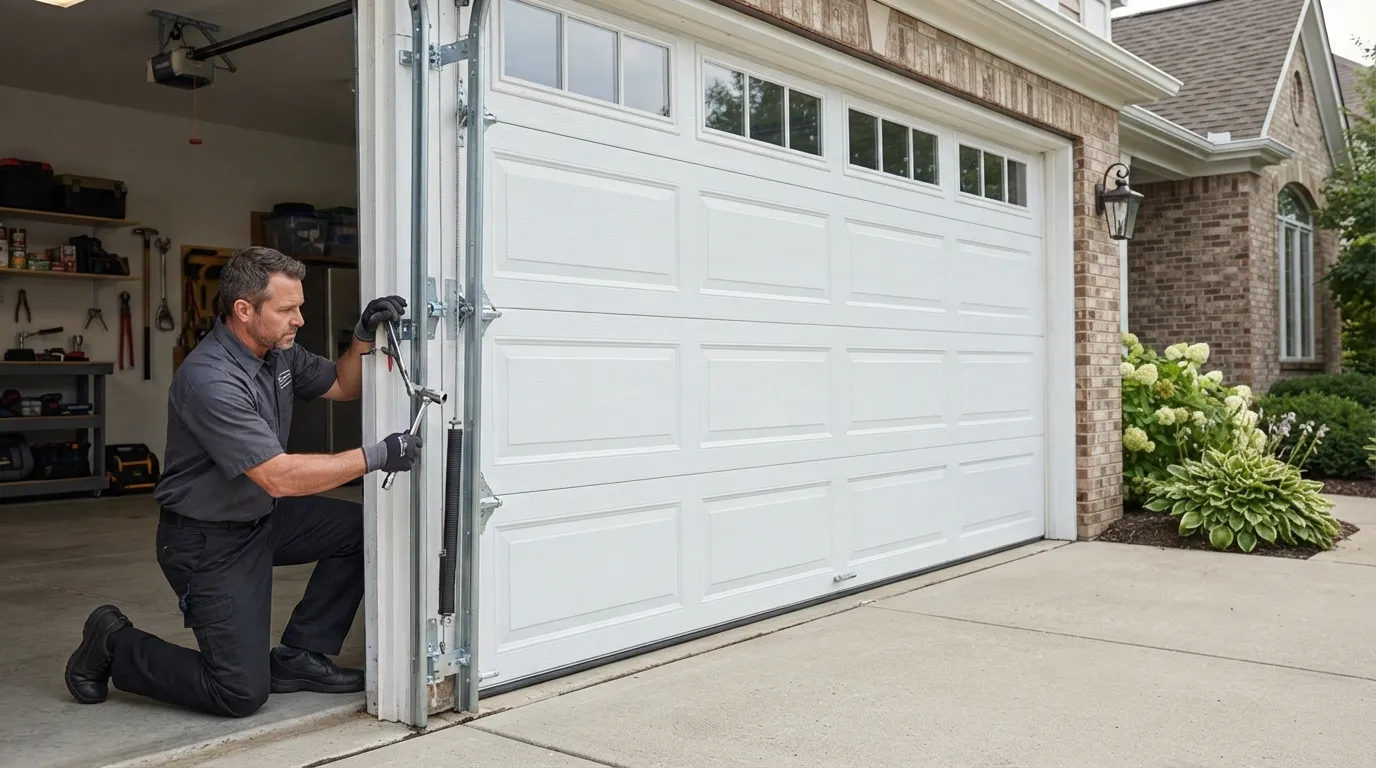
Most of the commercial buildings and the housing around them in Montclair went up around 1990 - a full decade newer than the median for the wider service area, which sits closer to 1981. That gap matters on a door. Buildings from this stretch were almost all fitted with torsion spring systems and steel roll-up sections as standard, not the older extension-spring, one-piece doors you still find on the region's 1960s and 70s stock. The failure pattern follows the hardware: torsion springs age out and snap under load, cable drums wear on the shaft, and the galvanized coating on steel rollers starts pitting after twenty-plus winters. This region falls in a cold, severe climate band, and a commercial door cycling dozens of times a day sees that cold hit the spring steel and the seal gaskets hard - metal fatigue moves faster in temperature swings than it does in a mild climate. On a 1990-era commercial door, the part most likely to fail first is the torsion spring itself, followed by worn hinges at the panel joints from repeated cycling. We don't see the older low-headroom track setups here that we do on some of the region's oldest buildings, which is one less complication when we're sourcing parts.