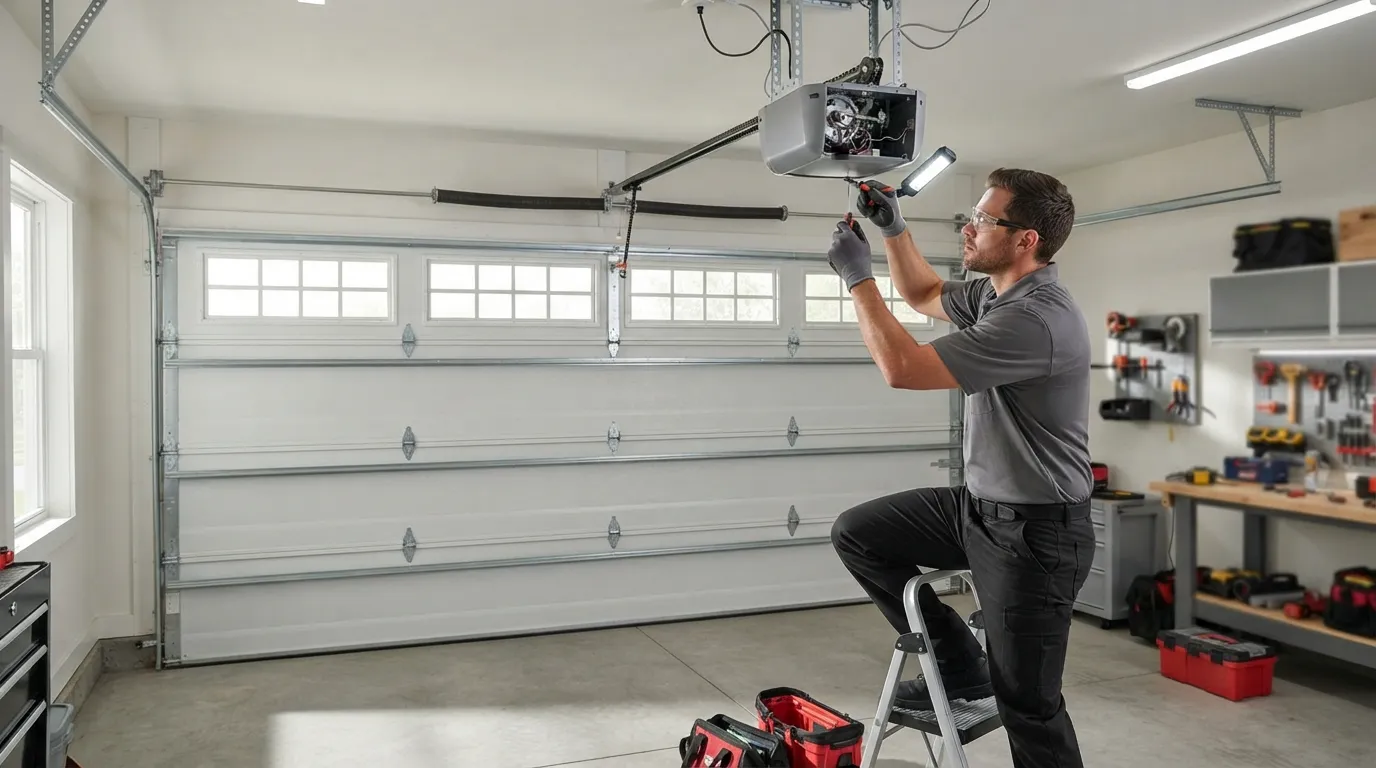
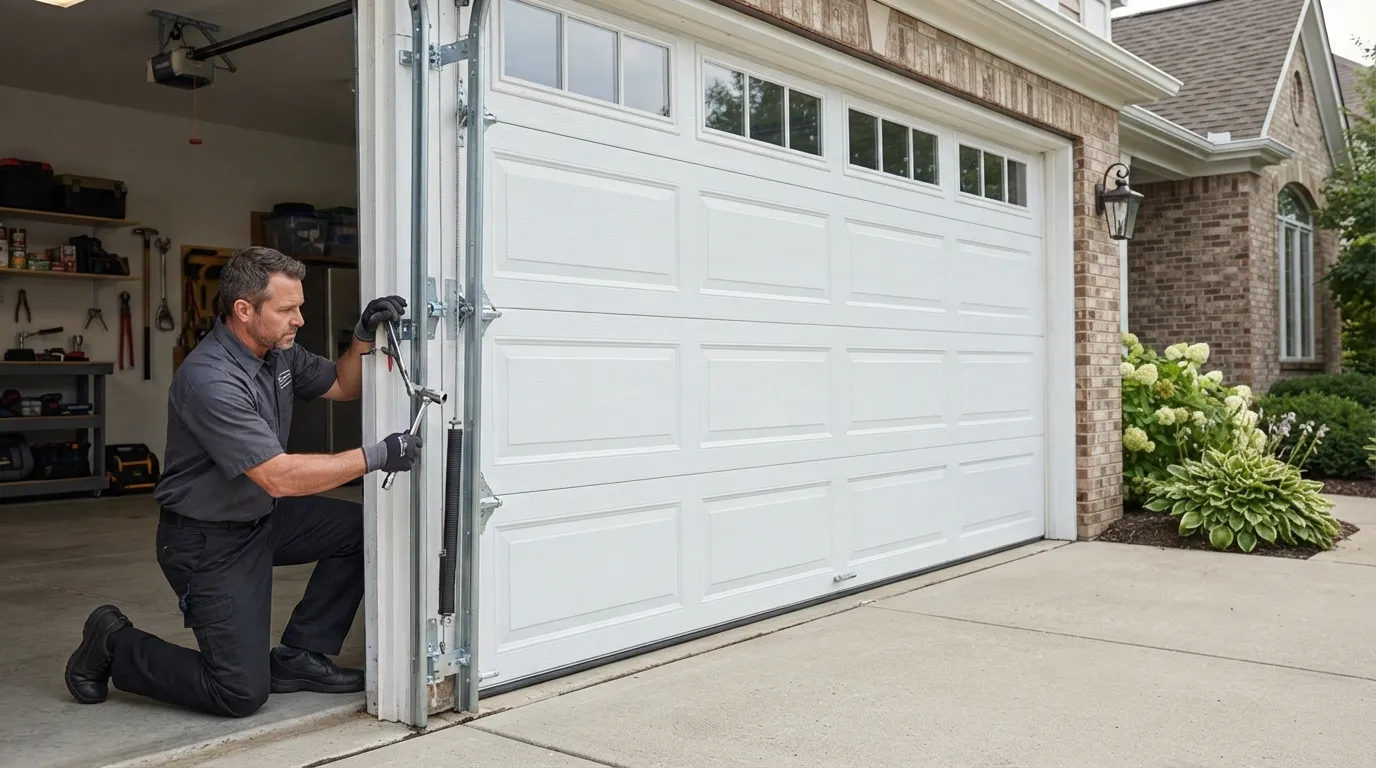
Montclair's houses cluster tightly around a median build year of 1990 - a full decade newer than the median across Chantilly Garage Door Pros' broader service area, which sits at 1981. That later build date matters for panel work: 1990s-era doors used narrower steel sections with foam cores bonded to thinner face skins than the doors going up in the late '70s and early '80s. Those thinner skins dent more easily and, once dented, the foam core often cracks along with them rather than just deforming. Add in the region's cold, severe winter swings - hard freezes followed by quick thaws - and you get a specific failure pattern here: hairline cracks along the bottom rail of a panel where moisture gets in, freezes, and pushes the seam apart from the inside. It shows up as a bubble or a soft spot before it ever shows up as a visible crack. Homes on newer concrete pads with attached garages built to 1990s layouts also tend to have shorter tracks and lower headroom than older detached garages, which limits which replacement panels will actually clear the opener rail without modification. We don't stock every profile that matches a 30-year-old door on the truck, and telling you that up front is more useful than pretending otherwise.